
Your website might look beautiful, but if no one can find it in search results, it is not doing its job. Many businesses invest in design first and think about search engine optimization later, only to realize their site struggles to attract traffic or generate leads. The truth is that web design and search engine optimization must work together from the beginning if a website is going to rank, engage visitors, and convert them into customers.
Search engines evaluate more than just content. They look at how fast a page loads, whether the site works smoothly on mobile devices, how clearly information is structured, and how easily users can navigate the experience. These design decisions directly influence visibility in search results and the way people interact with your website.
At Javalogix, web design is built around search performance from day one. Instead of treating SEO as an add-on, the process combines technical optimization, user experience strategy, and conversion-focused design. The result is a website that not only looks professional but is also structured to rank in search engines, attract qualified visitors, and turn traffic into real business growth.
Web Design and SEO Overview
Web design and search engine optimization work together to determine whether a website appears in search engine results or remains invisible online. A well-structured website design helps search engines understand content, evaluate user experience, and decide where a page belongs on the search engine results page. When these elements are aligned, businesses gain stronger search rankings and more qualified traffic.
Many companies invest heavily in website design but overlook how search engines evaluate their pages. Without SEO foundations, even a visually impressive site may struggle to appear in search engine results pages. Search engines analyze page speed, content hierarchy, alt text, meta descriptions, and navigation structure to understand how useful a page is to users.
At Javalogix, web design is developed with search performance in mind from the start. Instead of separating design and SEO, Javalogix combines website design, technical optimization, and quality content to support stronger search engine rankings.
The result is a website that does more than look professional. It communicates clearly with search engines, improves user experience, and positions businesses to compete for top visibility on the search engine results page.
How Web Design Impacts Search Engine Optimization Rankings
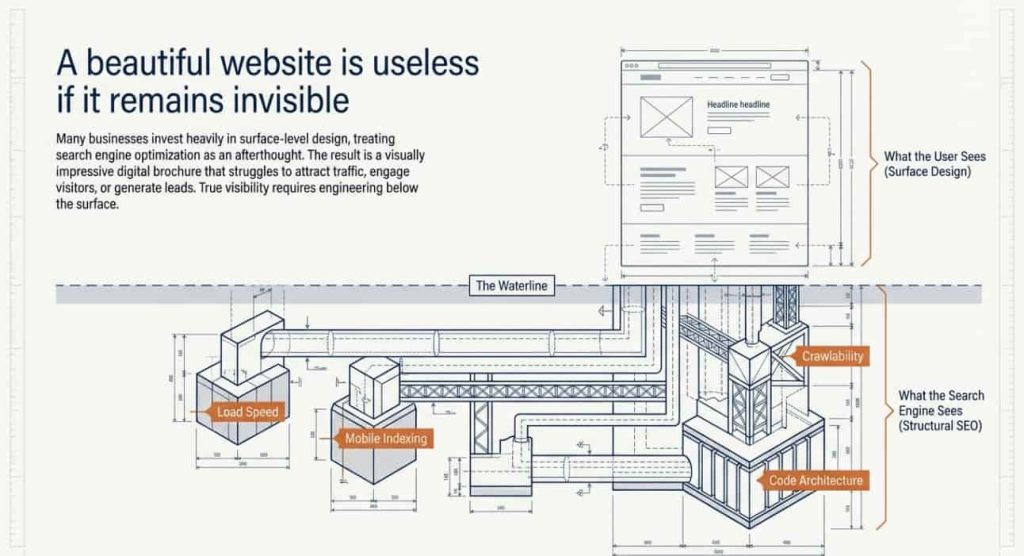
Site Speed and Performance
Page speed is one of the most important ranking factors influencing search engine results. When a website loads slowly, visitors lose patience and leave before engaging with the content. Search engines interpret this behavior as a poor user experience, which can lower search rankings.
Research from Google shows that even a one-second delay in page speed can significantly reduce conversions and increase bounce rates. Fast loading pages improve engagement, increase time on site, and strengthen signals that search engines use to evaluate content quality.
Optimizing site performance requires several technical improvements. Images must be compressed while maintaining quality. JavaScript and CSS files should be minimized to reduce unnecessary code. Browser caching allows frequently accessed content to load faster, while a content delivery network distributes assets across servers to improve loading speed worldwide.
At Javalogix, performance optimization is a core part of web design and search engine optimization strategy. Every website developed by Javalogix is tested for speed, mobile usability, and performance under real conditions.
This approach ensures that websites load quickly, deliver a smooth user experience, and meet the performance standards search engines use when determining search engine rankings.
Mobile-First Web Design for SEO Rankings
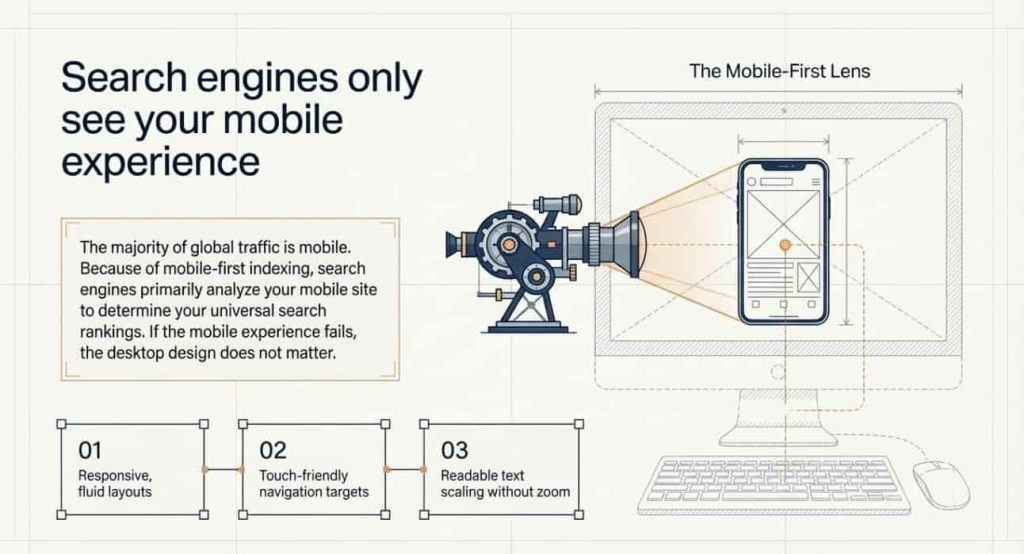
Mobile devices now generate the majority of global web traffic, which is why search engines use mobile-first indexing when evaluating websites. This means search engines primarily analyze the mobile version of a site when determining search rankings.
If a website is not optimized for mobile devices, it can struggle to appear in search engine results pages even if the desktop version performs well. Mobile-first web design focuses on responsive layouts, fast loading speeds, and simplified navigation that works smoothly on smaller screens.
Touch-friendly navigation, readable text sizes, and efficient page structure are essential for maintaining strong user experience on mobile devices. When visitors can easily browse content on their phones, they stay longer and interact more with the site. These engagement signals strengthen search engine optimization performance.
Javalogix builds websites using a mobile-first design philosophy that prioritizes performance across all devices. Each website design project at Javalogix is tested across smartphones, tablets, and desktops to ensure consistent usability.
This approach allows businesses to improve search rankings, reach mobile users effectively, and deliver a seamless user experience that encourages engagement and conversions.
Site Architecture and Crawlability
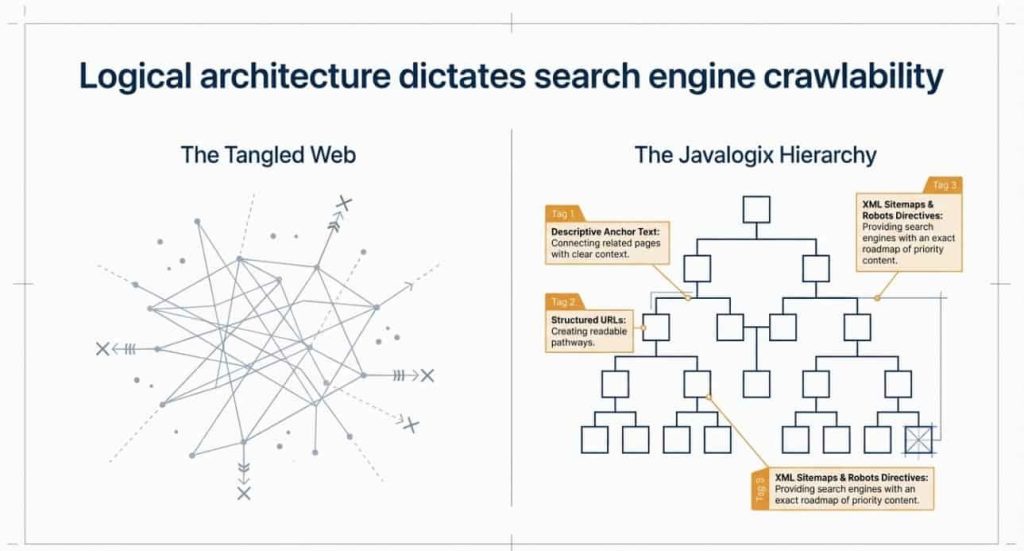
A clear site architecture helps search engines understand how pages are connected and which content is most important. Without a logical structure, search engines may struggle to crawl a website efficiently, which can limit visibility in search engine results.
Strong website design begins with organized navigation and a clear hierarchy of content. Pages should be grouped logically so users and search engines can quickly locate relevant information. Search engines rely on this structure to evaluate how pages relate to each other and how authority flows through the website.
Internal linking plays an important role in improving crawlability. When related pages are connected with descriptive anchor text, search engines can discover additional content and better understand its context. Structured URLs, XML sitemaps, and properly configured robots directives also support efficient crawling.
Javalogix designs website architecture with both users and search engines in mind. Every project includes structured navigation, optimized internal linking, and content organization that improves crawlability.
By combining thoughtful website design with technical SEO principles, Javalogix helps businesses improve indexing, strengthen search engine rankings, and create websites that are easier for both users and search engines to explore.
User Experience and Engagement Signals
User experience is closely tied to search engine optimization because search engines measure how people interact with a website. When visitors stay longer, explore multiple pages, and engage with content, these signals indicate that the website provides value.
Search engines analyze engagement metrics such as bounce rate, time on page, and interaction patterns to determine how useful a page is for search queries. If users quickly leave a site, search engines may interpret that behavior as a sign that the content did not meet expectations.
Effective website design improves engagement by making information easy to find and navigate. Clear content structure, intuitive navigation, readable layouts, and strong calls to action help visitors move through the site naturally.
Javalogix focuses heavily on user experience when developing web design strategies. Every layout, content block, and navigation element is built to guide visitors toward relevant information and encourage interaction.
By aligning user experience with search engine optimization principles, Javalogix creates websites that not only rank in search engine results pages but also keep visitors engaged and moving toward meaningful actions.
How Web Design and SEO Drive Business Growth
When web design and search engine optimization work together, websites become powerful tools for business growth. Higher search rankings increase visibility, bringing qualified visitors who are actively searching for products or services.
A well-optimized website design does more than attract traffic. It guides visitors through a clear journey from discovery to conversion. Strategic layouts, strong content structure, and clear calls to action help transform website visitors into leads and customers.
Businesses that invest in SEO-focused website design often experience steady increases in organic traffic and long-term marketing returns. Unlike paid advertising, organic visibility in search engine results pages continues to generate traffic long after the initial optimization work is complete.
Javalogix specializes in building websites that combine design strategy with search engine optimization. Each website developed by Javalogix is structured to improve search rankings while guiding visitors toward meaningful engagement.
By focusing on performance, user experience, and conversion pathways, Javalogix helps businesses turn website traffic into measurable growth and stronger online authority.
SEO Best Practices in Web Design
Modern web designers must understand how search engines evaluate websites. SEO best practices should be integrated into the design process rather than added later as an afterthought.
A clear content hierarchy is essential. Proper use of headings helps search engines identify the most important topics on a page while guiding users through the content logically. Structured layouts make it easier for both visitors and search engines to interpret information.
Image optimization is also critical. Alternative text allows search engines to understand visual elements while improving accessibility for users. Compressing images reduces page size and improves loading speed, which supports stronger search rankings.
Structured data and schema markup provide additional context for search engines, increasing the chances of appearing in enhanced search results. Clear meta descriptions also improve click-through rates by explaining the value of each page in search engine results.
Javalogix integrates these best practices into every website design project. By combining technical SEO, strong content structure, and performance optimization, Javalogix helps businesses create websites that are easier for search engines to understand and easier for users to trust.
Build a Website Designed to Rank and Convert
A website should not only look professional. It should also attract qualified traffic, rank in search engine results, and guide visitors toward meaningful actions. Achieving this balance requires a strategy that combines web design, search engine optimization, and user experience.
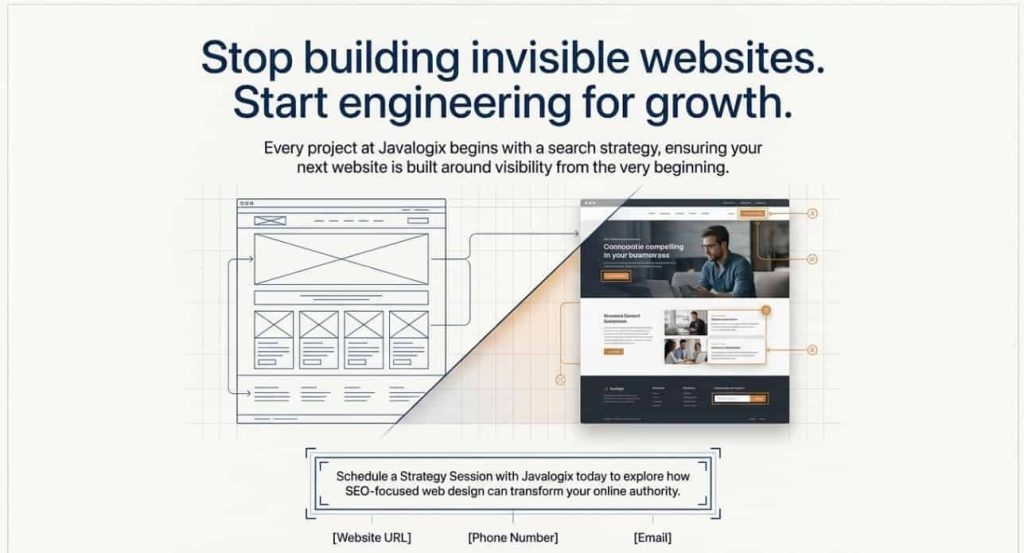
At Javalogix, every website project begins with a search strategy. Instead of designing pages first and adding SEO later, Javalogix builds websites around search visibility from the beginning. This approach ensures that site architecture, content hierarchy, and navigation structure support strong search engine rankings.
Javalogix focuses on performance, crawlability, and conversion pathways. Fast loading pages, mobile-friendly layouts, and optimized content help search engines understand each page while creating a smooth experience for visitors.
The result is a website that does more than exist online. It attracts traffic through search engine optimization, engages visitors through thoughtful website design, and converts that attention into real business opportunities.
Businesses that want a website built for performance can start by scheduling a strategy session with Javalogix and exploring how SEO-focused web design can transform their online visibility.
Frequently Asked Questions
What is the relationship between web design and SEO?
Web design and SEO work together to improve a website’s visibility in search engines. Search engines analyze design elements such as page speed, mobile responsiveness, site structure, and navigation. When these elements are optimized, search engines can crawl and understand content more easily, improving rankings and user experience.
Does website design affect search engine rankings?
Yes, website design directly affects search engine rankings. Search engines evaluate factors such as page speed, mobile usability, structured navigation, and content hierarchy. A well-designed website helps search engines crawl and index pages efficiently, which improves visibility in search engine results pages and increases organic traffic.
Why is mobile-first design important for SEO?
Mobile-first design is important because search engines now use mobile-first indexing. This means the mobile version of a website is the primary version used to determine rankings. Websites optimized for smartphones and tablets provide better user experiences, faster loading times, and stronger engagement signals that improve search performance.
How does page speed impact SEO?
Page speed is a major search engine ranking factor. Slow-loading pages cause visitors to leave quickly, increasing bounce rates and reducing engagement. Search engines interpret this behavior as a poor user experience. Faster websites improve user satisfaction, increase time on site, and strengthen SEO performance.