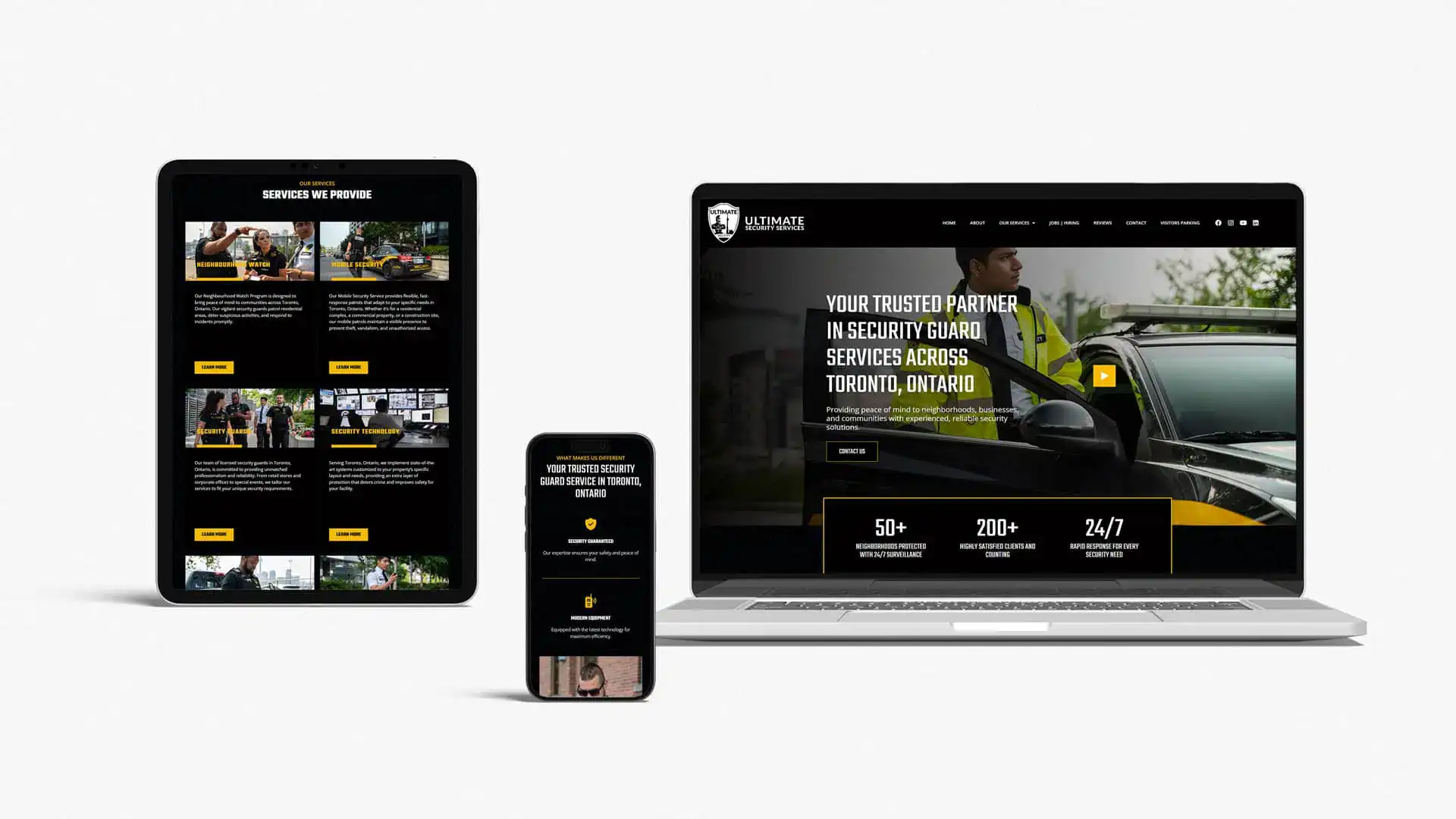
What we can show is the groundwork. Ultimate Security, a Toronto guard company, shows up first on Google for "security guard services Toronto". That's the kind of standing AI answers draw on.
Read the Ultimate Security storyAI search optimization is how your business gets named when people ask ChatGPT or Google's AI who to call. More people skip the list of links and just ask. "Who's a reliable roofer near me who can come this week?" "Which dentist nearby takes new patients on Saturdays?" The answer names two or three businesses. If you're not one of them, you never got the chance to quote.
We make sure the places those answers read from say clearly who you are, what you do, where you work, and why people trust you.
“A customer told me ChatGPT recommended my competitor.”
It happens more every month. The answer didn't come from nowhere: it came from that competitor's website, listing and reviews. Yours can say more.
“Someone called selling me ‘AI rankings’. Is that real?”
Nobody can sell you a guaranteed spot in an AI answer. What you can do is make your business the easiest one to recommend. That's the honest version of this work.
“Is SEO dead now?”
No. The answers lean heavily on the same pages, listings and reviews Google already trusts. Good SEO is most of the work.
Nobody outside those companies knows the exact recipe, and anyone who says they do is guessing. But you can see what the answers lean on, because they often show their sources:
They also favour businesses whose details agree everywhere. If your website says one phone number, your listing another and a directory a third, you look less certain, and a less certain business is harder to recommend.
We ask ChatGPT, Google's AI and other assistants the questions your customers ask, in your towns, and write down who gets named. Then we do it again every month.
One page per service, with the details people ask about: price ranges, how long it takes, areas served, hours, what happens on the first visit. Written so a person and a machine can both pull the answer out in one read.
Your licences and certifications, years in business, warranties and guarantees you actually offer, on every page we build.
Name, address, phone, hours and services, matched across your website, your Google listing and the directories that matter.
A review request after every job, worded so customers mention the service and the town. More in review management.
Local news, suppliers, associations and community pages that talk about your work.
Which questions name you now, which ones don't yet, and what we're doing about it.
Showing up in AI answers is one piece of how we make you the business people find when they need you. It isn't a separate trick. It rides on two things we already do:
If those two are weak, no amount of AI work will fix it. If they're strong, you're most of the way there.
We work with businesses across Canada and the US. In Toronto, the same work sits inside SEO Toronto and Local SEO Toronto. Elsewhere, see all the cities we serve.
We don't publish a before-and-after number for AI answers yet. The answers change from one day to the next, and we won't put a figure on this page that we can't stand behind.
What we can show is the groundwork. Ultimate Security, a Toronto guard company, shows up first on Google for "security guard services Toronto". That's the kind of standing AI answers draw on.
Read the Ultimate Security storyResults depend on your market, your budget and how fast you answer the phone.
It isn't sold on its own. It's part of the search work in our plans: $1,500, $3,000 or $5,000 a month, month to month, depending on how many services and towns you want to show up for.
See what each plan includesSomething else on your mind? Call (647) 254-0850 and ask.
Yes. ChatGPT and Google's AI pull from the websites, listings and reviews that Google already trusts. If anything, a business with good SEO now gets two chances: the regular results and the AI answer.
No. Nobody can, and you should walk away from anyone who says otherwise. We make your business the clearest, most consistent and most reviewed answer in your area, and we show you every month whether it's being named.
Ask it the way a customer would, with your town in the question: "Who's a good electrician in Burlington for a panel upgrade?" Try a few versions, and try Google too. If you're not named, the free check-up shows you why.
Months, like SEO. The pages and listing fixes go in early, but the answers update on their own schedule. Reviews and mentions build over time.
If your SEO is solid, you're most of the way there. The extra work is in the details: pages that answer questions directly, facts AI can quote, and checking what the answers actually say about you.
Thirty minutes. We'll ask ChatGPT and Google the questions your customers ask, look at who gets named, and tell you what it would take to be one of them.