
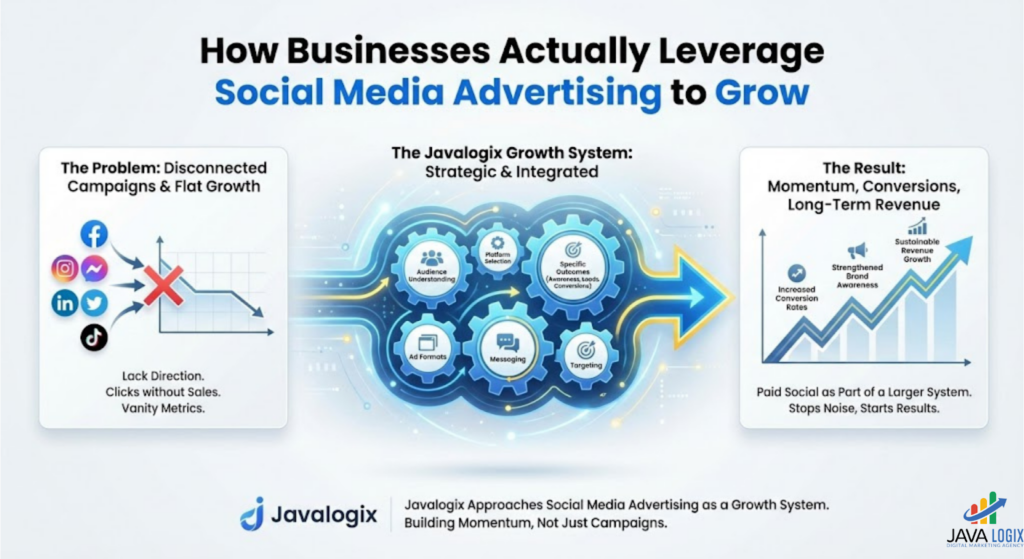
Most businesses do not struggle with social media advertising because ads do not work. They struggle because their campaigns lack direction. Money gets spent on Facebook, Instagram, LinkedIn, or TikTok, activity looks promising, but growth stays flat. Clicks come in. Sales do not follow.
Social media advertising only drives growth when it is built around a clear marketing strategy. That means understanding the target audience, choosing the right social media platforms, and running each ad campaign with a specific outcome in mind. Brand awareness, lead generation, and conversions require different ad formats, messaging, and audience targeting. When those pieces are misaligned, even well designed ads fail to move the business forward.
Javalogix approaches social media advertising as a growth system, not a collection of disconnected campaigns. Every decision is tied to business goals, from ad placement and creative direction to conversion tracking and optimization. The focus is on building momentum that improves conversion rates, strengthens brand awareness, and supports long term revenue growth. When paid social is treated as part of a larger system, it stops producing noise and starts producing results.
How Social Media Advertising Drives Business Growth
Social media advertising is one of the most powerful tools businesses have to expand reach and drive measurable growth. Unlike organic posts, which can get lost in crowded feeds, paid campaigns allow you to reach precisely the audiences who matter most. The key is not just exposure; it’s influence. Every ad should connect with your target audience in a way that guides them through the customer journey, from awareness to consideration and finally conversion.
For example, Instagram ads can generate initial interest with visually compelling content, while Facebook advertising can retarget warm audiences who have already engaged with your brand. LinkedIn Ads are ideal for B2B marketing, helping businesses connect with decision-makers and professionals ready to take action. Leveraging analytics tools like Google Analytics allows marketers to measure click-through rates, conversion rates, and engagement, giving insight into which strategies truly deliver results.
Successful campaigns go beyond impressions or likes. They build brand awareness while driving meaningful actions. Using creative ad formats, retargeting strategies, and data-driven audience targeting turns social media advertising from a cost into a scalable growth engine. Businesses that adopt this approach see compounding effects: more conversions, stronger customer loyalty, and a measurable impact on revenue over time.
Choosing the Right Platforms for Your Business Goals
Selecting the right social media platforms is essential for turning ad spend into real business growth. Each platform attracts different audiences and behaviors, so understanding where your target audience spends time is critical. Facebook remains a top choice for broad B2C marketing because of its extensive user base and diverse ad formats. Instagram excels for visually-driven brands, allowing creative storytelling that resonates with younger consumers. LinkedIn Ads are ideal for B2B marketing, connecting businesses with decision-makers and professionals ready to engage. For brands aiming to reach Gen Z, TikTok offers short-form video content with high potential for virality.
Consider each platform’s ad formats and targeting capabilities. For example, Facebook and Instagram allow precise audience targeting and retargeting, while LinkedIn can reach professionals by industry, company size, or role. Test different platforms to see where your ads resonate best and monitor engagement closely. Staying updated on platform trends ensures your campaigns remain relevant and effective. The right platform choice aligns with your marketing strategy, maximizes conversions, and strengthens brand awareness across your target audience.
Building Audiences That Convert, Not Just Clicks
The real power of social media advertising comes from reaching audiences who are likely to take action, not just scroll past your ads. Focusing on warm audiences; people who have engaged with your brand before—can dramatically improve conversion rates. Retargeting previous website visitors, newsletter subscribers, or social media engagers keeps your brand top of mind and encourages repeat interaction.
First-party data is a major advantage. By analyzing customer behavior and preferences, businesses can create personalized ads that speak directly to audience needs. Lookalike audiences allow you to expand reach to people similar to your best customers, uncovering new potential buyers. Segmentation based on demographics, behavior, and interests ensures messaging is relevant and compelling. Dynamic ad content that adapts to user behavior further boosts engagement and increases the likelihood of conversion.
Active engagement with your audience is also critical. Responding to comments and messages builds trust and fosters loyalty, turning interactions into meaningful business results. By regularly monitoring analytics, marketers can refine targeting strategies and improve campaign performance over time. Collecting feedback through surveys or polls provides additional insight, allowing campaigns to stay aligned with audience expectations. Focusing on the right people with the right message transforms social media advertising from a numbers game into a sustainable growth strategy.
Creating Ads That Support Growth, Not Vanity Metrics
Effective social media advertising goes beyond likes and shares. Every ad should be designed to drive meaningful outcomes, whether that’s a purchase, lead, or newsletter signup. Aligning ad creativity with the customer journey is essential. Awareness ads should introduce your brand story and value, consideration ads highlight features or benefits, and conversion-focused ads guide users to take action.
Testing different ad formats is critical. Videos, carousel ads, and static images all perform differently depending on your audience and platform. A/B testing headlines, visuals, and calls-to-action helps identify what resonates most. Clear calls-to-action should direct users toward the desired outcome, removing any friction in the conversion process.
Storytelling adds emotional connection. People remember stories better than facts, so weave narratives that show your brand’s purpose or how your product solves a real problem. Value propositions must be clear, showing the audience what they gain by engaging.
Tracking performance metrics that matter; ROI, customer acquisition costs, and conversion rates, ensures campaigns remain focused on growth rather than vanity. Using insights from Google Analytics and platform-specific tools allows marketers to optimize continuously. Maintaining consistent messaging through a content strategy keeps audiences engaged over time, reinforcing brand identity while driving long-term business results.
Budgeting and Scaling Paid Social Campaigns
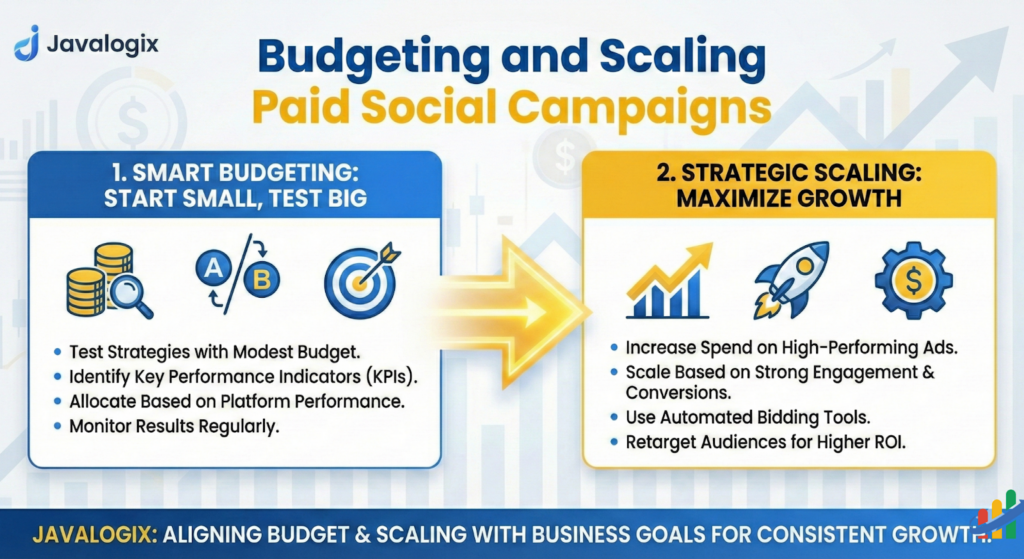
Starting with a modest budget allows businesses to test strategies before committing larger amounts. Identify key performance indicators that signal when to increase or adjust ad spend. High conversion rates, strong engagement, or click-through rates can indicate that a campaign is ready to scale.
Allocate budgets based on platform performance and audience engagement. Some social media platforms may deliver better results for your target audience, so invest where returns are highest. Keep seasonal trends and customer behavior in mind, as they can affect ad performance. Automated bidding tools can optimize spend, helping get the most value while reducing manual adjustments.
Regular monitoring of campaign results is essential. Use analytics tools to track conversions, engagement, and cost per action. Adjust spending as needed to maximize ROI while avoiding wasted budget. Balance brand-building campaigns with direct response campaigns to ensure growth is comprehensive. Retargeting audiences who have already interacted with your brand can increase return on ad spend and strengthen conversions. Scaling should always align with business goals, ensuring that social media advertising drives consistent and sustainable growth.
Measuring What Actually Matters
To make social media advertising drive real business growth, focus on metrics that reflect results, not just activity. Track conversion rates, customer lifetime value, and cost per acquisition to understand how campaigns impact your bottom line. Basic metrics like clicks or impressions alone do not show effectiveness.
Use tracking tools and Google Analytics to monitor traffic, engagement, and conversions. UTM parameters help identify which ads, platforms, and placements deliver the best results. Understanding the customer journey is critical. Knowing how audiences move from awareness to consideration and conversion enables smarter decisions about targeting and messaging.
Combine quantitative data with qualitative insights. Customer feedback, survey responses, and engagement patterns reveal how ads resonate and where campaigns can improve. Regularly analyze ROI and adjust campaigns based on performance. Post-campaign reviews highlight successful strategies and uncover opportunities for optimization.
Focusing on meaningful metrics ensures that every ad dollar contributes to growth. By measuring what matters, businesses can optimize campaigns, improve audience targeting, and make data-driven decisions that maximize the power of social media advertising for business growth.
How to Combine Social Media Advertising and TV Ads for Maximum Reach
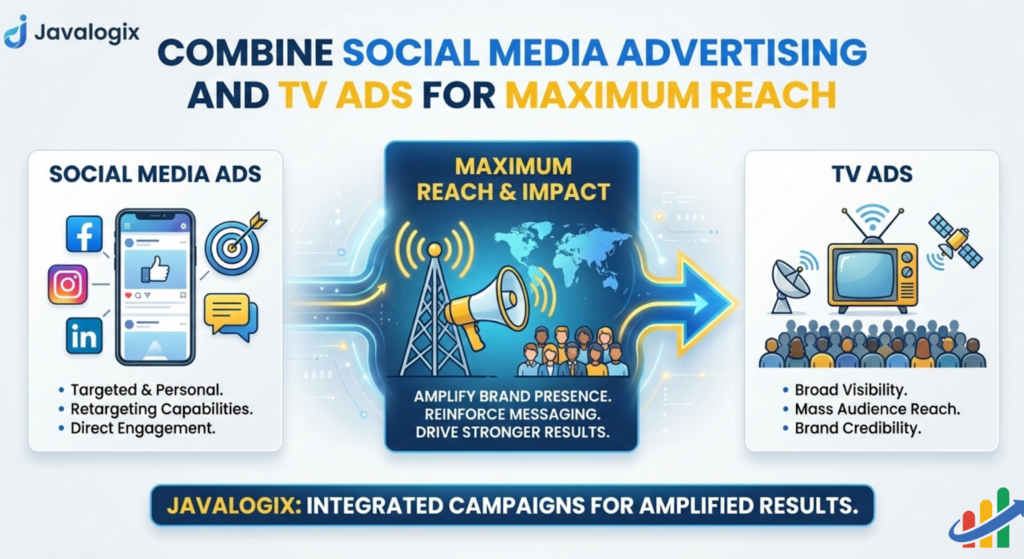
Integrating TV and social media advertising can amplify brand awareness and drive stronger results. TV ads create broad visibility, introducing your brand to large audiences. Social media then targets those same viewers with personalized ads, reinforcing your message and increasing recall.
Start by analyzing TV audience demographics and timing. Use this data to retarget viewers on platforms like Facebook, Instagram, or LinkedIn with ads that match the messaging seen on TV. This coordinated approach strengthens brand recognition and encourages conversions. Social media also allows direct engagement, letting brands respond to questions, comments, or user-generated content sparked by TV campaigns.
Cross-channel analytics are key. Track how audiences interact with both TV and social media to understand which placements and creatives drive the most impact. Timing and consistency matter. Running ads simultaneously and maintaining cohesive messaging across channels increases brand frequency and trust. This strategy turns awareness into action, making social media a powerful complement to traditional advertising and giving businesses a measurable advantage in their marketing strategy.
Leveraging Social Media Advertising as a Long-Term Growth System
Social media advertising works best when it is part of a larger, strategic growth system. Businesses should integrate paid campaigns with branding, website optimization, and customer engagement to maximize results. A consistent brand identity across platforms builds trust and ensures that every ad reinforces your story, making it easier to convert audiences into loyal customers.
Optimizing landing pages and website experiences is crucial. Visitors driven by social media campaigns should find clear messaging, fast load times, and easy navigation to complete desired actions. Collecting and using customer feedback helps refine both products and campaigns, keeping strategies aligned with audience needs over time.
Customer retention is equally important. Retargeting campaigns, loyalty incentives, and community-building efforts on social media help maintain engagement and encourage repeat purchases. Integrating email marketing or CRM tools allows businesses to nurture leads generated from paid campaigns into long-term relationships.
Consistency and persistence are essential. Regularly reviewing campaign performance, testing new strategies, and adapting to changing trends ensures that social media advertising continues to deliver measurable growth. This structured approach transforms social media from a series of campaigns into a dependable engine for business success.
How Javalogix Helps Businesses Turn Paid Social Into Growth
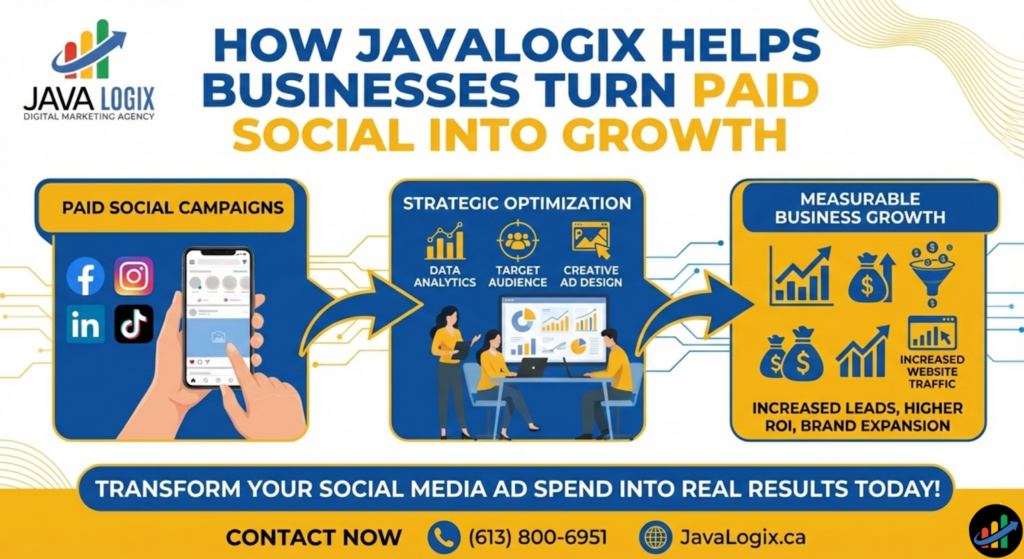
Running social media ads without strategy can waste time and budget. Javalogix builds paid social campaigns that focus on measurable growth, not just clicks or impressions. By analyzing audience behavior and platform performance, campaigns are tailored to reach the right people at the right time, increasing conversion rates and boosting brand awareness.
Our approach covers everything from ad placement and creative design to audience targeting and optimization. Each campaign is aligned with your marketing strategy, ensuring consistent messaging across platforms like Facebook, Instagram, LinkedIn, and TikTok. We also integrate campaigns with other channels, including email and website experiences, to maximize results and strengthen customer relationships.
Businesses don’t struggle with social ads because platforms don’t work. They struggle because campaigns lack strategy. Javalogix ensures every ad supports business objectives, tracks performance with tools like Google Analytics, and adjusts in real time for maximum impact.
Book a strategy call today to see how a paid social campaign can turn ad spend into measurable growth and long-term business success.
Frequently Asked Questions
What is social media advertising and how does it work for businesses?
Social media advertising is the process of promoting products or services on platforms like Facebook, Instagram, LinkedIn, and TikTok. Businesses create targeted ads to reach their specific audience based on demographics, interests, and behaviors. Paid campaigns allow brands to increase visibility, drive website traffic, and encourage conversions, while also building long-term brand awareness.
How can a business measure the success of their social media ads?
Success is measured by tracking metrics that align with business goals, such as conversion rates, click-through rates, and return on ad spend. Tools like Google Analytics and platform-specific insights provide real-time data, helping businesses optimize ad campaigns and maximize ROI.
Which types of businesses benefit most from social media advertising?
Almost any business can see results, but those with visually engaging products or services often perform best. Retail, food, fashion, beauty, and service-based companies can target niche audiences effectively. Social media ads allow small businesses to compete with larger competitors by reaching specific customers efficiently.
Can social media advertising help small businesses compete with larger companies?
Yes. Paid campaigns allow small businesses to target high-value audiences with precision, level the playing field, and generate leads without the massive budgets often required for traditional advertising. Strategic campaigns can turn limited ad spend into measurable growth.
What strategies create engaging social media ads?
Engaging ads combine clear messaging, compelling visuals, and strong calls-to-action. Using a variety of ad formats such as videos, carousels, and stories keeps content fresh. Audience targeting, A/B testing, and storytelling improve engagement, while analytics ensure continuous optimization.