
Redesigning a website is a major project that often feels overwhelming without the right framework in place. A Website Redesign Request for Proposal (RFP) acts as that framework by setting clear goals, outlining technical requirements, and giving vendors a precise understanding of what is expected. When done correctly, it saves valuable time, prevents miscommunication, and minimizes risks like scope creep.
Javalogix has worked with businesses across different industries and understands how a well-structured RFP can transform the redesign process. Instead of struggling with vague proposals or mismatched vendors, you gain clarity and control over your project. This resource highlights the essential elements every RFP should include, along with practical templates, real-world examples, and expert recommendations. By focusing on both strategy and detail, you will be better prepared to attract the right partners, improve user experience, strengthen SEO performance, and build a website that truly supports your business goals.
What is a Website Redesign RFP?
A Website Redesign RFP (Request for Proposal) is a document that defines the goals, requirements, and expectations of a website revamp. It invites qualified vendors to submit proposals that align with your project scope, helping you find the right partner for your redesign.
A well-written RFP usually includes company background, project objectives, design standards, and evaluation criteria. This clarity allows vendors to tailor their proposals effectively and fosters a competitive bidding process.
By setting expectations upfront, an RFP reduces miscommunication, highlights priorities such as user experience and SEO, and ensures timelines and budgets are realistic. In short, it provides a clear framework that builds trust and helps organizations select the best-fit vendor for a successful website redesign.
Why Do You Need a Website Redesign RFP?
Creating a Website Redesign RFP is one of the smartest steps you can take when planning a new website. It not only keeps your project organized but also ensures that vendors fully understand your needs before sending proposals. Here are the key benefits:
- Define Current Challenges and Goals
An RFP gives you the chance to document exactly what isn’t working on your current website, whether it’s outdated design, poor functionality, or weak SEO performance. At the same time, you can outline your goals for the redesign, giving agencies a clear roadmap of your expectations. - Clarify Vendor Requirements
Your RFP highlights the specific skills or expertise you want in a partner, such as experience with e-commerce platforms, industry-specific knowledge, or proven design capabilities. This saves time by filtering out vendors who are not a good fit. - Identify the Best Agency for the Job
By gathering structured proposals, you can directly compare agencies based on budget, timeline, and expertise. This process makes it easier to select the partner who best aligns with your vision and objectives. - Streamline Communication
An RFP reduces back-and-forth emails and vague proposals. With requirements outlined upfront, agencies can focus on tailored solutions rather than asking for clarification later. - Ensure Better Project Outcomes
When everyone starts on the same page, projects run more smoothly. A detailed RFP sets clear expectations, minimizes misunderstandings, and increases the chances of launching a redesign that delivers measurable results.
Key Elements of a Winning RFP
A strong website redesign RFP keeps your project clear, organized, and attractive to the right vendors. Focus on these core elements to set the stage for success:
Company Background and Goals
Give vendors a snapshot of your business, mission, and what you want to achieve with the redesign. This context helps them tailor their proposals to your vision.
Project Scope and Deliverables
Outline exactly what you expect, from technical updates and design improvements to SEO and usability goals. Clear deliverables reduce the chance of misunderstandings.
Budget and Timeline
Be upfront about budget ranges and deadlines so vendors can determine if they’re a good fit and plan accordingly.
Design and Technical Requirements
Specify branding guidelines, user experience expectations, and any required platforms, integrations, or technologies to ensure compatibility.
Evaluation and Submission Process
Explain how proposals will be judged and include clear submission guidelines, deadlines, and any confidentiality requirements. This makes the process smoother for everyone.
Step-by-Step Guide to Writing Your RFP
Crafting a website redesign RFP may seem challenging, but breaking it down into simple steps makes the process much easier. Follow these five steps to ensure your document is clear, professional, and effective.
Step 1: Define Goals and Pain Points
Start by outlining what is not working with your current website. This could include outdated design, slow performance, poor SEO visibility, or weak conversions. Then clearly state the goals you want the redesign to achieve, such as improved user experience, mobile responsiveness, or stronger lead generation.
Step 2: Outline Must-Have Features
List the features and functionalities that are essential for your new website. Examples include e-commerce capabilities, third-party integrations, advanced analytics, or accessibility compliance. Prioritizing features helps vendors understand your non-negotiables.
Step 3: Detail Timelines and Budget Ranges
Provide a realistic budget range and a target launch timeline. Vendors need this information to assess whether they can deliver within your constraints. Transparency here prevents wasted time on mismatched proposals.
Step 4: Provide Evaluation Process
Explain how you will review proposals. Will you prioritize creativity, technical expertise, pricing, or industry experience? Setting clear evaluation criteria helps agencies customize their submissions.
Step 5: Proof, Finalize, and Distribute
Before sharing your RFP, review it carefully for clarity and accuracy. Then distribute it to carefully selected vendors. A polished RFP signals professionalism and sets the tone for a successful partnership.
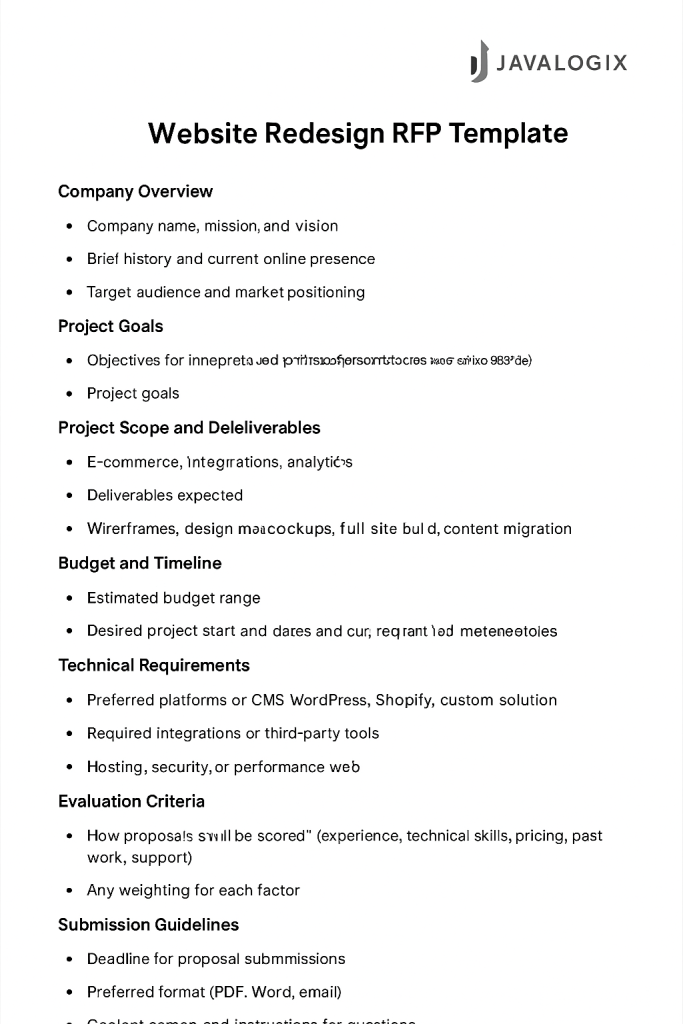
Website Redesign RFP Template
Creating a well-structured RFP template can streamline the process of gathering proposals for your website redesign. Start with a clear outline that can be adapted to different projects. Include sections such as company background, where you can provide a brief overview of your organization and its goals, project scope detailing the expected deliverables, and budget where you can outline the financial constraints.
To enhance usability, design the template with designated areas for input, making it user-friendly. A checklist at the end can help ensure that all key elements are covered. For each section, consider providing examples to guide users in filling it out.
Customization is also vital; allow users to modify sections to cater to specific project needs and vendor capabilities. Visually appealing templates encourage use, so ensure the design is clean and professional.
To maximize the effectiveness of the template, include tips on how to best utilize it for successful outcomes. Offering both PDF and Word formats can provide versatility, making it easy for users to edit and share. Lastly, encourage feedback on the template to make improvements over time.
here is a RFP Template
6. Examples of Strong RFPs
When crafting an RFP for a website redesign, looking at examples can be incredibly helpful. Here are some notable cases:
For a small business, an RFP may emphasize local SEO strategies and community engagement initiatives. This approach not only boosts search visibility but also fosters customer loyalty through local connections.
In the realm of e-commerce, the focus might be on enhancing user experience, ensuring mobile optimization, and creating clear conversion pathways. This helps in driving sales and improving customer satisfaction, which is vital for online retailers.
A non-profit organization might highlight their mission alignment in their RFP, showcasing strategies for donor engagement and outreach. This aligns potential vendors with the organization’s goals, ensuring that the redesign supports fundraising efforts effectively.
For a corporate project, a detailed approach to branding consistency and user interface design can be crucial. The RFP could outline the importance of maintaining a professional image across all digital platforms, which resonates with stakeholders and clients alike.
An educational institution may prioritize accessibility features and integration with learning management systems in their RFP. This ensures that their website is user-friendly for all students, including those with disabilities, and enhances the overall learning experience.
Startups may focus on innovative design and rapid development timelines in their RFPs. Attracting funding often requires a standout digital presence, making it essential for vendors to understand the urgency and creativity needed in their proposals.
In the healthcare sector, an RFP could prioritize patient experience and compliance with regulations. This ensures that the redesign meets both user needs and legal standards, which is crucial in maintaining trust and safety.
A government RFP might stress transparency, accountability, and public accessibility in the redesign. This helps build trust with citizens and ensures that the website serves as an effective informational resource.
For B2B services, the emphasis could be on lead generation and client relationship management features. This approach attracts vendors who understand the nuances of B2B interactions and can deliver a site that supports business growth.
Finally, a non-traditional organization might showcase unique design approaches in their RFP, aiming to set themselves apart from competitors. This could involve innovative layouts or interactive elements that reflect their brand’s distinct identity.
7. Pro Tips for Better RFP Responses
- Be Clear and Concise
Avoid overwhelming vendors with lengthy or overly technical documents. Use straightforward language, short sentences, and clearly defined sections. This makes it easier for vendors to understand your requirements, identify key priorities, and respond accurately without misinterpretation. Clarity in your RFP also reduces back-and-forth questions and speeds up the evaluation process. - Set Realistic Budgets and Timelines
Provide budgets and deadlines that reflect the scope of the project. Unrealistic figures can discourage qualified vendors or result in low-quality proposals. Being transparent about constraints allows vendors to suggest alternative solutions, phased approaches, or cost-saving measures, ultimately improving the quality and feasibility of submissions. - Communicate Expectations Upfront
Clearly outline what success looks like for your project, including deliverables, performance standards, and any preferred methodologies. Explicit expectations minimize ambiguity and help vendors tailor proposals that align with your vision. Including any evaluation criteria in advance also ensures proposals are focused and relevant. - Encourage Questions and Clarifications
Open a channel for vendors to ask questions during the RFP process. This not only clarifies uncertainties but often leads to innovative solutions you may not have considered. Hosting a Q&A session or providing a structured question form ensures vendors can provide detailed, accurate, and thoughtful responses. - Provide Feedback and Maintain Transparency
Share constructive feedback after proposal submission, even for vendors you do not select. This fosters goodwill, builds stronger relationships for future projects, and encourages vendors to improve their submissions over time. Additionally, clearly explaining your scoring process and selection criteria increases trust and ensures vendors understand how decisions are made. - Engage Stakeholders and Use Visuals
Involve internal teams early to capture diverse perspectives, confirm priorities, and strengthen internal alignment. Using visuals like charts, tables, or infographics can make your RFP easier to read, highlight key requirements, and help vendors quickly understand complex information. This approach improves both the quality and speed of vendor responses.
8. Streamline Your Website Redesign With Javalogix
Creating a strong website redesign RFP is just the first step toward a website that truly drives results. While templates and examples provide structure, the real impact comes from partnering with an agency that understands your industry, audience, and business goals.
With careful planning, clear communication, and the right expertise, your redesign can transform from a complex project into a strategic advantage. The outcome isn’t just a visually appealing site—it’s a platform that strengthens SEO, enhances user experience, and generates tangible business results.
Javalogix has helped businesses across industries craft RFPs that attract the right vendors and guide successful redesigns. Our team combines technical know-how, design insight, and strategic planning to ensure every decision aligns with your objectives. From UX research to visual storytelling, we focus on what truly converts your audience.
Don’t let your redesign be a guessing game. With Javalogix, your RFP becomes a roadmap to a website that drives results. From strategy and design to UX optimization and SEO, we ensure every decision boosts your business. Work with us today and turn your vision into a site that captivates, converts, and grows your brand.
Frequently Asked Questions
What is a website redesign RFP and why do I need one?
A website redesign RFP, or Request for Proposal, is a document you create to outline your needs when looking for help redesigning your website. It helps potential designers or agencies understand what you’re looking for, making it easier to find the right match for your project.
What should I include in my website redesign RFP?
Your RFP should include details like your project goals, target audience, design preferences, and any specific features you want. It’s also helpful to share your timeline and provide information about your current website and any issues you’ve been facing.
How do I evaluate the responses I get for my RFP?
When evaluating RFP responses, look for how well each proposal addresses your needs. Consider the team’s experience, their proposed solutions, and whether they align with your goals. Also, check references or past work to get a sense of their style and reliability.
Can I use templates for my website redesign RFP?
Yes, using templates can be very helpful. They provide a structure and ensure you don’t miss any important details. Just make sure to customize the template to fit your specific project and needs.
What are some common mistakes to avoid when creating an RFP?
Common mistakes include being too vague about your needs, not providing enough background information, and failing to set clear deadlines. It’s also important to avoid overloading the RFP with unnecessary details that might confuse potential bidders.
TL;DR Creating a Website Redesign RFP is essential for aligning project goals and vendor capabilities. A strong RFP attracts the right proposals, minimizes misunderstandings, and defines project scope. Key elements include company background, project scope, budget, and evaluation criteria. Follow a step-by-step guide to outlining your goals, must-have features, and submission guidelines. Use our free RFP template and explore examples of successful RFPs to enhance your project. For best results, keep your RFP concise, avoid jargon, and set realistic expectations.
Contact us today if you have any questions. Feel free to visit our Facebook or LinkedIn pages. Java Logix is a leading web design company from Ottawa.
