Introduction: The High-Stakes Game of Local HVAC Leads
For most HVAC business owners, digital marketing feels less like a strategy and more like a high-stakes gamble. You pour thousands of dollars into Google Ads, watching the “clicks” climb while your dispatch board remains empty. This is the “leaky bucket” problem—a fatal flaw where leads are generated at a high cost but never actually work because the backend infrastructure—your CRM and automation—is non-existent.
To scale profitably, you must move away from “random acts of marketing” and adopt the HVAC model: a precision-engineered funnel designed to capture, nurture, and close leads with surgical efficiency.
Takeaway 1: Your Homepage is Killing Your Conversion Rate
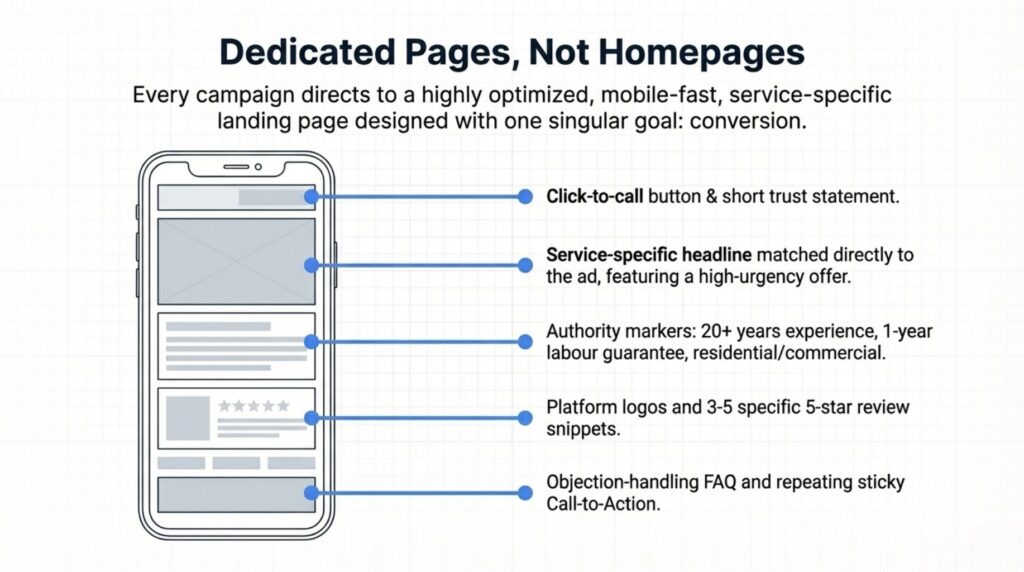
Sending paid traffic to a company homepage is a cardinal sin of HVAC marketing that effectively torches your ad budget. A homepage is a digital brochure designed for browsing; a high-converting funnel requires a dedicated destination. Following the “One Page Per Offer” rule, you must deploy specific landing pages for “Emergency Repair,” “Installation,” and “Maintenance.”
To convert a cold visitor in the Toronto market, your landing pages must lead with non-negotiable trust signals. According to the HVAC SOP, these pages must feature:
- 20+ years of experience to establish immediate authority.
- A 1-year labor guarantee to remove the risk of poor workmanship.
- Product registration support and a clear distinction that you handle both residential and commercial service.
Without these localized authority markers and a singular focus, the user will bounce back to the search results, and you will have paid for your competitor’s next lead.
Takeaway 2: The Strategic “Priority Order” of HVAC Growth
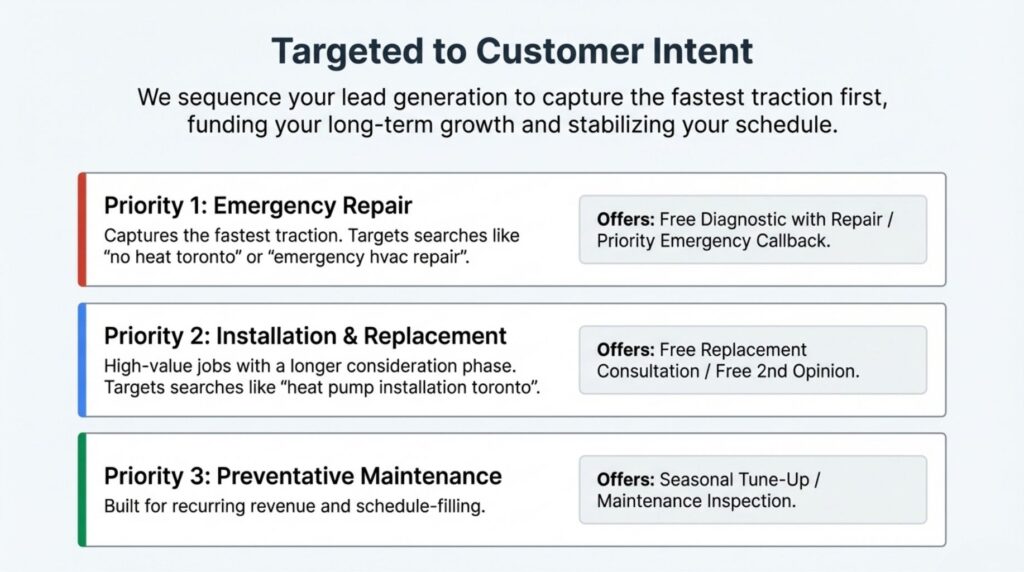
Scaling is not about doing everything at once; it is about doing the right things in the right sequence. The HVAC model utilizes a specific Funnel Priority Order to ensure immediate cash flow and operational stability:
- Emergency Repair: Your entry point. These leads have the highest intent and provide the fastest traction because a homeowner without heat or AC is ready to buy now.
- Installation / Replacement: Launched only after the repair funnel stabilizes. These are high-ticket items that require a more intensive nurture process.
- Maintenance: The final piece of the puzzle, used to fill the schedule during shoulder seasons and build long-term recurring revenue.
When targeting the “Emergency Repair” segment, your messaging must bypass the logical brain and hit the psychological triggers of someone in a crisis:
Messaging Angles for Success: Urgency, authority, local trust, warranty, experience, peace of mind.
Takeaway 3: Speed is No Longer Optional (The Instant Automation Rule)
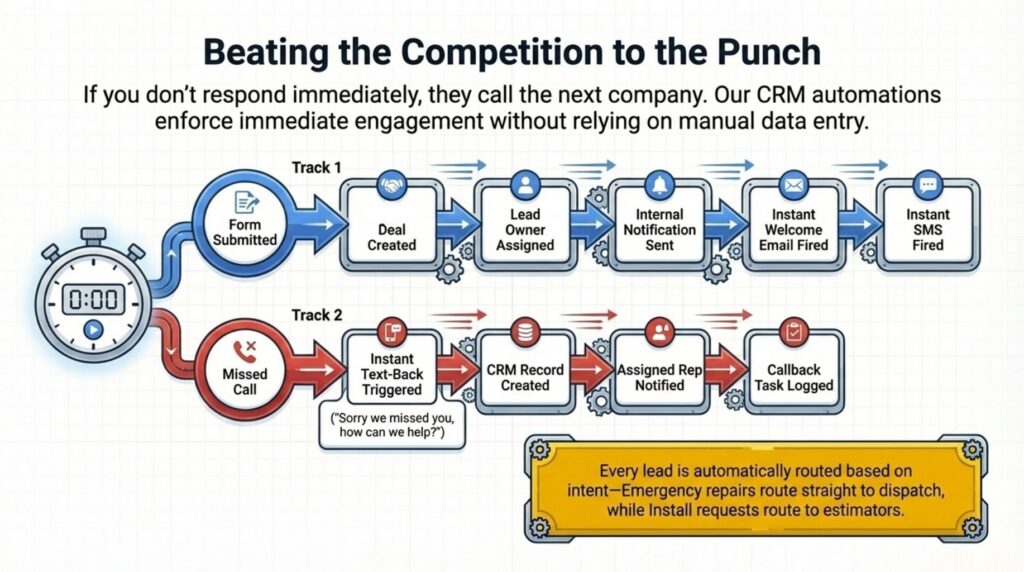
In the HVAC industry, the first company to respond is almost always the one that wins the job. The moment a lead submits a form, they are in an anxious “searching” state. If you wait even ten minutes to respond, they have already called the next three companies on Google.
The HVAC system utilizes a “Trigger: Form Submitted” automation sequence that changes the customer’s psychological state from “searching” to “serviced” in seconds. By sending an Instant SMS and an Instant Email with the subject line “We received your service request,” you provide the immediate relief that takes them off the market.
This commitment to speed must extend to missed calls. If your team is in the field or on the other line, the system must automatically recover the opportunity:
Missed Call SOP Action: Send instant text-back.
Takeaway 4: The “Second Opinion” as a High-Value Hook
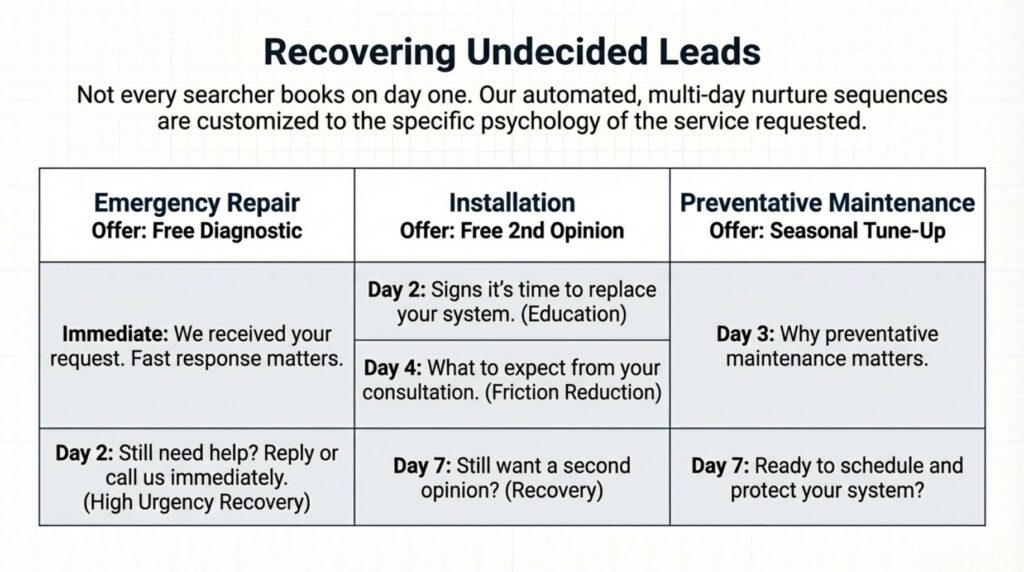
For $15,000+ installation and replacement jobs, homeowners are naturally cautious. While your competitors are all fighting for the same “free estimate” click, the HVAC model uses a high-value, counter-intuitive hook: the “Free Second Opinion.”
This strategy is brilliant because it intercepts high-intent customers who are already in the “consideration” phase of a competitor’s funnel. By offering a second opinion, you position yourself as the expert advocate rather than a salesperson. You are effectively stealing the deal at the finish line by resolving the “sticker shock” or uncertainty created by another company. This is reinforced at the end of the nurture sequence:
Installation Email Subject: “Still want a second opinion?”
Takeaway 5: Stop Scaling Based on Clicks
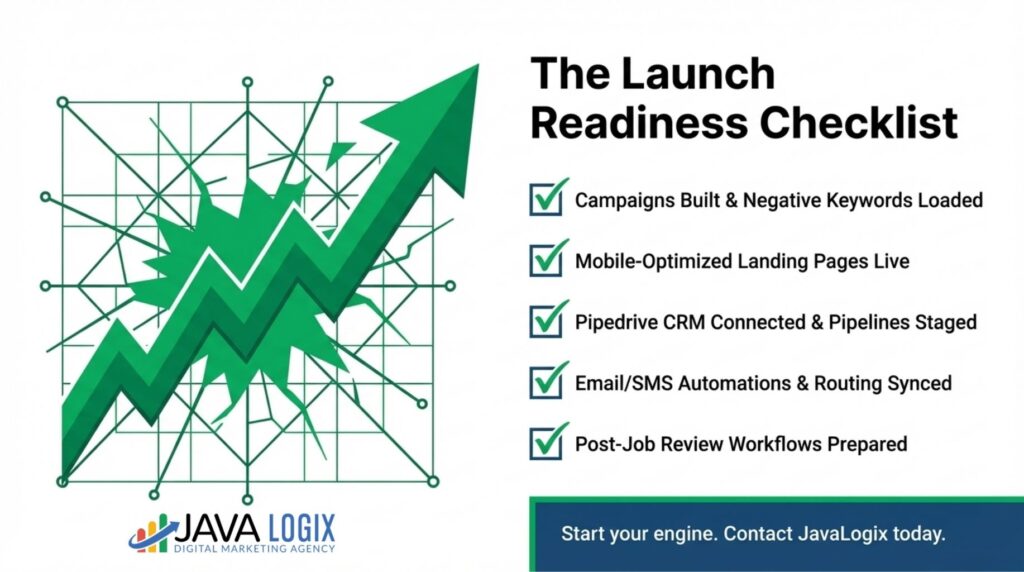
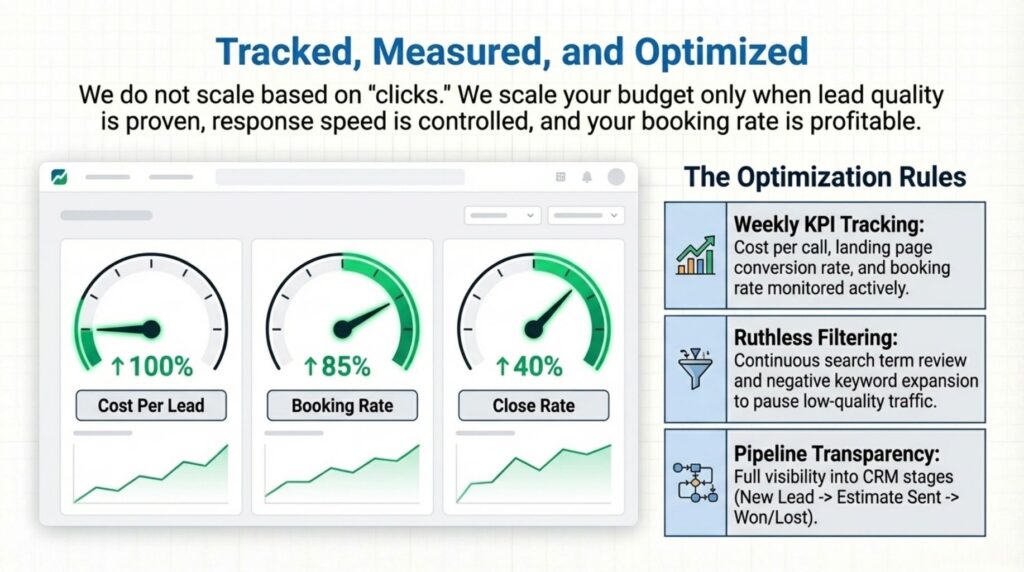
Vanity metrics like Click-Through Rate (CTR) are a trap. Scaling your budget simply because you have high traffic is “flying blind.” The HVAC Final Operating Rule dictates that you only increase spend in the Toronto + 25km service area when your backend operations can actually convert that volume into profit.
Before you touch the budget, these five criteria must be met:
- Lead Quality: Verified as qualified and high-intent.
- Tracking: 100% accurate conversion tracking from click to CRM.
- Response Speed: Consistently under control and immediate.
- Booking Rate: Stable and meeting internal benchmarks.
- Close Rate: Supports the increased cost of acquisition.
Conclusion: Beyond the First Job
The ultimate goal of this system is not a single furnace repair; it is the creation of a local trust engine. By utilizing the Review Funnel SOP, triggered the moment a “Job is complete in CRM,” you turn every successful service call into a public testimonial.
This review velocity lowers your future lead costs and feeds your maintenance nurture list, turning a one-time emergency into a decades-long relationship.
Is your current marketing a series of random acts, or a documented system designed to scale?