
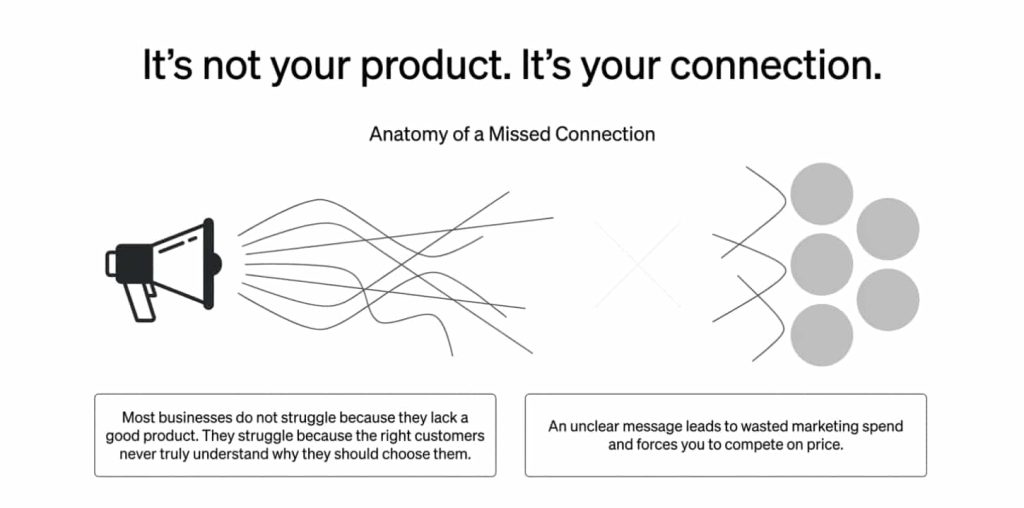
Most businesses don’t struggle because they lack a good product. They struggle because the right customers never truly understand why they should choose them. If your message feels unclear, inconsistent, or easy to ignore, the problem usually comes down to one thing: weak brand positioning and an undefined target market.
Brand positioning is how your business is perceived in the minds of your ideal customers. Your target market defines exactly who those customers are. When these two are not aligned, marketing becomes expensive, conversions stay low, and growth feels unpredictable.
This is where clarity changes everything. When you define your brand positioning and target market with intention, your messaging becomes sharper, your audience becomes easier to reach, and your value becomes obvious.
At Javalogix, we work with businesses that are tired of guessing. We help them refine their positioning, identify the right audience, and turn scattered marketing efforts into focused, measurable growth.
Define Brand Positioning and Target Market
Most businesses don’t struggle because of poor products. They struggle because their message never connects with the right people. At Javalogix, we often see companies trying to appeal to too many audiences at once, which leads to unclear positioning, wasted marketing spend, and low conversion rates.
Brand positioning defines how your business is perceived in the minds of your ideal customers. Your target market defines who those customers are. When either one is unclear, your marketing loses focus and your growth becomes inconsistent. This is where many businesses get stuck. They invest in campaigns, content, and ads, but without clarity, nothing performs the way it should.
At Javalogix, we focus on aligning positioning with the right audience so messaging becomes clear and effective. When your brand positioning and target market work together, your value becomes easier to understand, your campaigns perform better, and your growth becomes more predictable. This is not just about visibility. It directly impacts revenue, customer trust, and long-term success.
What Is Brand Positioning?
Brand positioning is how your business is understood and remembered by your ideal customer. It is not what you say about your brand. It is what your audience believes after interacting with your messaging, your offers, and your overall presence.
At Javalogix, most businesses we work with already have strong products or services. The real issue is that their positioning is unclear. When positioning is weak, businesses blend into the market, compete on price, and struggle to build trust. Customers hesitate because they do not see a clear reason to choose one brand over another.
Strong brand positioning changes that. It makes your value immediately clear, separates you from competitors, and attracts the right customers while filtering out the wrong ones. Javalogix helps businesses define positioning in a way that connects directly to real customer problems. When done right, this leads to higher conversion rates, stronger brand recognition, and more consistent growth.
What Is a Target Market?
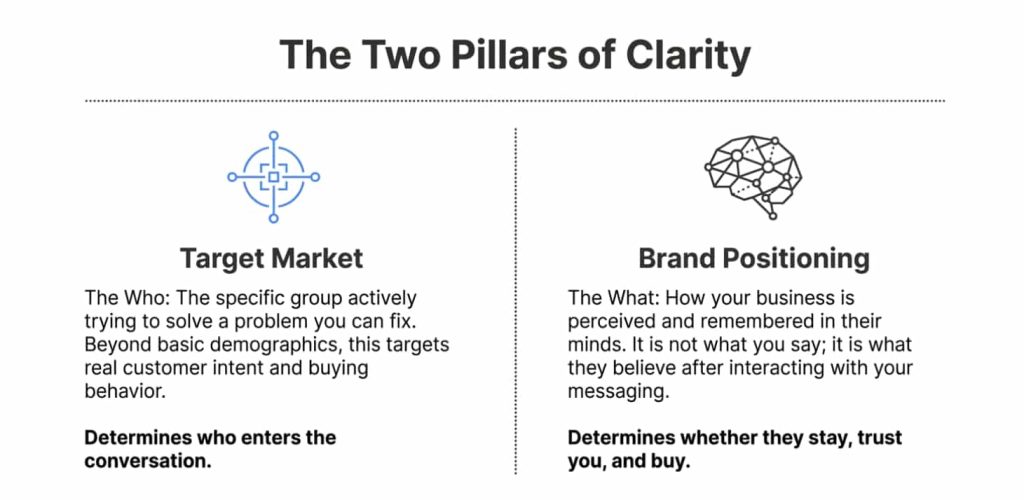
A target market is the specific group of people most likely to need and value what you offer. While this sounds straightforward, it is one of the most misunderstood parts of marketing. At Javalogix, we often see businesses rely too heavily on basic demographics, which leads to broad messaging that fails to connect.
Defining a target market goes beyond age, income, or location. It requires understanding what drives decisions. This includes pain points, behaviors, priorities, and the problems your audience is actively trying to solve. Two customers can look identical on paper but make completely different buying decisions based on what they value.
Javalogix helps businesses move beyond surface-level audience definitions and focus on real customer intent. When your target market is clearly defined, your messaging becomes more relevant, your offers become stronger, and your marketing becomes more efficient. This is where businesses start to see consistent engagement and higher conversion rates.
Brand Positioning vs Target Market
Brand positioning and target market are closely connected, but they serve different roles. Brand positioning defines how your business is perceived. Your target market defines who you are trying to reach. When these two are confused or misaligned, your marketing becomes ineffective.
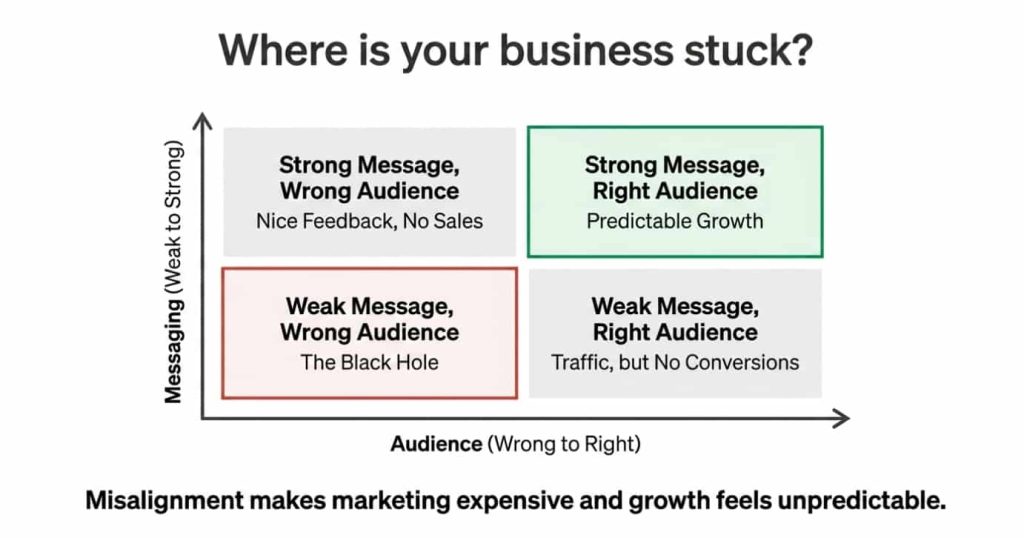
At Javalogix, we often see businesses attract attention but fail to convert. The reason is simple. They may be reaching the right people, but their positioning does not resonate. Or they may have strong messaging, but it is directed at the wrong audience.
Think of it this way. Your target market determines who enters the conversation. Your brand positioning determines whether they stay, trust you, and take action. Javalogix focuses on aligning both so your messaging feels clear, relevant, and consistent. This alignment leads to stronger engagement, better performance, and more predictable growth.
How Brand Positioning and Target Market Work Together
When brand positioning and target market are aligned, marketing becomes easier and more effective. When they are not, businesses experience confusion, low engagement, and inconsistent results. At Javalogix, this misalignment is one of the most common issues we help solve.
Many businesses target the right audience but communicate the wrong message. Others have strong messaging but aim it at the wrong group of people. In both cases, performance suffers. Campaigns may generate traffic, but conversions remain low because the message does not connect.
Javalogix works by connecting audience insights with clear positioning. When this alignment is achieved, messaging becomes more precise, offers become more compelling, and customers understand the value quickly. This leads to better engagement, stronger trust, and improved conversion rates. Over time, marketing shifts from trial and error to a system that consistently delivers results.
The Javalogix Brand Positioning Framework
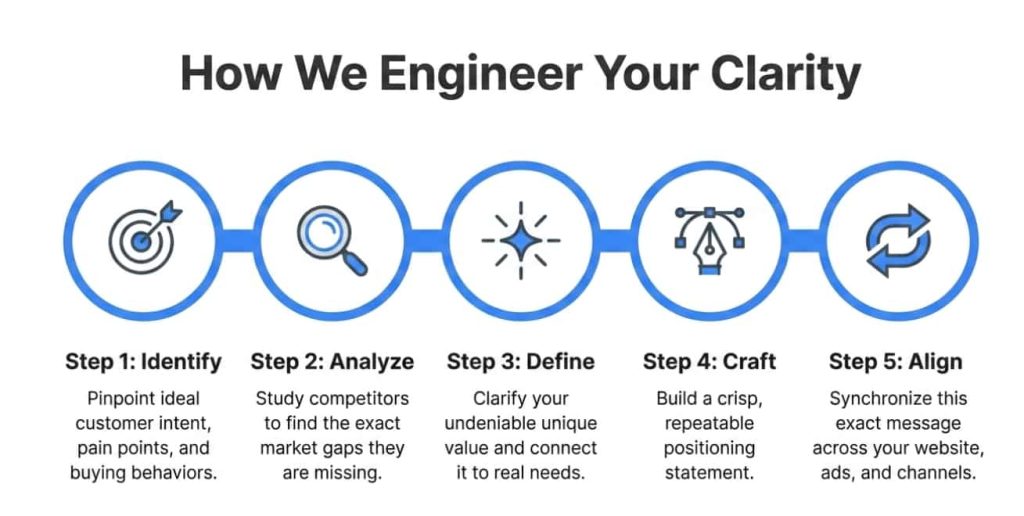
At Javalogix, we use a clear five-step framework to turn scattered messaging into a focused positioning strategy that actually converts. This approach is built from real client work, where clarity leads directly to better performance.
Step 1: Identify Your Ideal Customer
Define the specific audience you want to attract by focusing on their pain points, motivations, and buying behavior. Javalogix consistently sees that when businesses narrow their focus, their messaging becomes sharper and conversion rates improve.
Step 2: Analyze Your Competitors
Study how competitors position themselves so you can identify gaps in the market. The goal is not to copy what works, but to find opportunities to stand out in a way that matters to your audience.
Step 3: Define Your Unique Value
Clarify what makes your business different and why that difference matters. Javalogix focuses on connecting your strengths directly to real customer needs, not generic claims.
Step 4: Craft Your Positioning Statement
Turn your strategy into a clear message that defines your audience, the result you deliver, and how you deliver it. Simplicity here is critical for consistency and execution.
Step 5: Align Messaging Across Channels
Apply your positioning consistently across your website, ads, and content. Javalogix ensures that every touchpoint reinforces the same message, building trust and recognition over time.
Brand Positioning Examples (Analysis)
Most examples online list well-known brands without explaining why they work. At Javalogix, we focus on understanding the reasoning behind strong and weak positioning.
Strong Positioning Example:
A SaaS company targets small agencies struggling with lead generation. Instead of offering “marketing tools,” they position themselves as a solution for consistent client acquisition. This works because it connects directly to a high-value problem.
Why it works:
- Clear audience
- Specific outcome
- Strong differentiation
Weak Positioning Example:
A company describes itself as “innovative and customer-focused.” This fails because it is vague and interchangeable.
Why it fails:
- No clear audience
- No specific value
- No differentiation
Javalogix helps businesses move away from generic messaging and build positioning that clearly communicates value and drives action.
Signs Your Brand Positioning Is Not Working
Weak brand positioning often shows up in subtle but costly ways. At Javalogix, we help businesses identify these signs early so they can make the right adjustments.
Low conversion rates are one of the clearest indicators. If people are visiting your site but not taking action, your message may not be connecting. Confused customer feedback is another sign. When people do not fully understand what you offer, it points to unclear positioning.
Attracting the wrong audience is also common. This leads to wasted time and resources on leads that are not a good fit. Inconsistent messaging across channels further weakens trust and makes your brand harder to recognize.
Javalogix works with businesses to diagnose these issues and refine positioning so messaging becomes clear, relevant, and effective. Once positioning is corrected, performance improves because the message finally resonates with the right audience.
How Javalogix Helps Businesses Get Positioning Right
Javalogix works with businesses that are tired of unclear messaging and inconsistent results. Most clients come to us after investing time and budget into marketing that looks good on the surface but fails to convert. In many cases, the issue is not the channel or the campaign. It is the lack of clear brand positioning and a well-defined target market.
At Javalogix, we start by identifying the right audience using real data, behavioral insights, and customer intent. This goes beyond basic demographics and focuses on what actually drives decisions. From there, we refine your brand positioning so your value is clear, differentiated, and easy for your audience to understand. Once the foundation is set, we align your messaging across all channels so every touchpoint reinforces the same message and builds trust over time.
Javalogix focuses on execution that delivers measurable results. When positioning is done correctly, marketing becomes more efficient, engagement improves, and conversions increase because the message finally connects with the right people.
If your marketing is not performing the way it should, the problem may not be effort. It may be positioning. Javalogix helps you fix that. Reach out today to start building a brand that attracts the right audience and converts with clarity.
Frequently Asked Questions
What is brand positioning in simple terms?
Brand positioning is how your business is perceived by your ideal customers and why they choose you over competitors.
How do you define a target market?
You define a target market by identifying the group most likely to need and value your offer based on their behaviors, needs, and priorities.
Why is brand positioning important?
It improves clarity, increases conversions, and helps your business stand out in a competitive market.
Can a business change its positioning?
Yes. Businesses often refine positioning as they grow or as market conditions change.
TL;DR This blog post outlines a step-by-step framework for defining brand positioning and target markets, essential for business growth. Brand positioning shapes how customers perceive your brand in relation to competitors, while the target market specifies the group most likely to buy your product. The two concepts work together, guiding marketing strategies and enhancing customer loyalty. The Javalogix framework helps businesses identify their ideal customers, analyze competitors, and craft effective positioning statements. Common mistakes and signs of ineffective positioning are discussed, along with Javalogix’s role in helping businesses refine their strategies.