
Many business owners still ask the same question: do I really need a website? If your business relies on referrals, social media, or repeat customers, it can feel like a website is optional. After all, inquiries may still come in and work still gets done. But behind the scenes, something else is happening.
Today, customers research before they reach out. They Google your business name, compare options, read reviews, and look for signals that tell them you are credible and professional. When they cannot find a website, or find one that feels outdated, doubt sets in quickly. In many cases, they move on without ever contacting you.
A website is no longer just an online brochure. It is your digital storefront, your proof of legitimacy, and often the first impression your business makes. Whether someone finds you through search, social media, or word of mouth, your website plays a key role in whether they trust you enough to take the next step.
At Javalogix, we work with businesses that offer great services but struggle to turn online interest into consistent leads. In this guide, we break down why your business needs a website and what really happens when you do not, so you can make an informed decision with confidence.
Why Build a Website for Your Business?
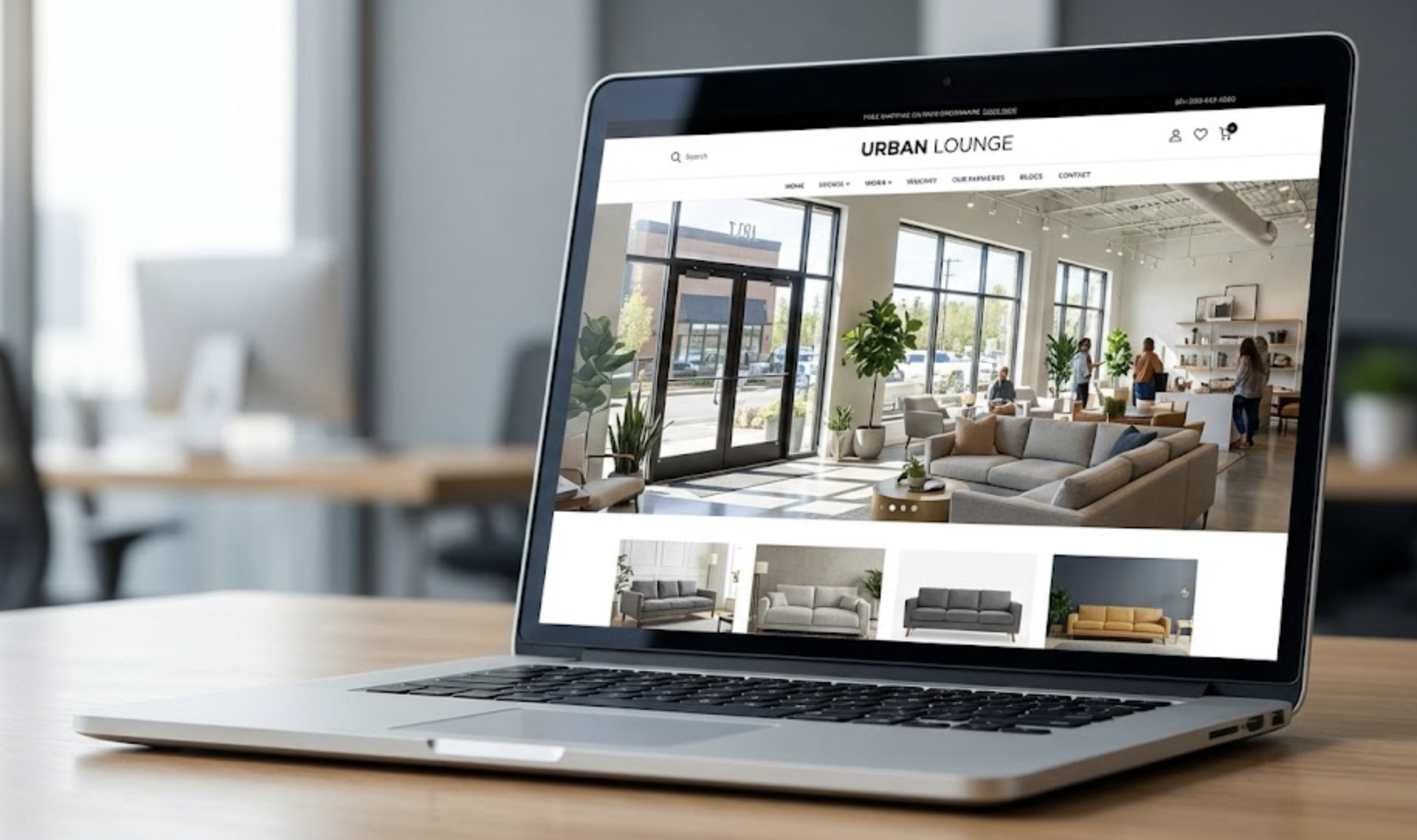
A business website is often the difference between being considered and being ignored. When potential customers hear about your business, their first instinct is to search for you online. Search engines have become the starting point for trust. If your business does not appear, or appears without a professional website, it creates uncertainty before a conversation even begins.
A strong online presence gives your business legitimacy. It shows that you are established, accessible, and serious about serving your customer base. Unlike social media profiles, a business website allows you to control your message, highlight your services clearly, and guide visitors toward action through a focused landing page.
Website development is not about chasing trends. It is about building a digital presence that supports how people actually make decisions today. From clear contact information to fast load times and mobile-friendly layouts, every detail contributes to user experience and credibility.
For a small business especially, a professional website helps level the playing field. You do not need a massive budget to look trustworthy. With thoughtful website design and clear positioning, your business can compete confidently and support long-term growth across your digital marketing efforts.
A Website Makes Your Business Easier to Trust
Trust is built long before a phone call or email. When customers land on your business website, they are quietly asking important questions. Are these people real? Are they professional? Can I rely on them?
A professional website answers those questions immediately. Clean website design, clear messaging, and visible customer testimonials help visitors feel confident in your business. Even simple elements like consistent branding, real photos, and easy-to-find contact information can make a significant difference.
Without a website, people are forced to rely on third-party platforms or social media, where information is often incomplete or inconsistent. That lack of control weakens your brand identity and makes it harder to stand out.
Search engines also reward trust. Businesses with clear content, proper structure, and Search Engine Optimization fundamentals tend to perform better in organic traffic. When your site communicates credibility, both users and search engines respond positively.
Trust is not built by saying you are reliable. It is built by showing it through a thoughtful digital presence that reflects the quality of your work.

Customers Expect Your Business to Have a Website
Customer expectations have changed. Today, having a business website is no longer a bonus. It is assumed. When people search for your company and cannot find a professional website, it raises doubts even if your service is excellent.
Customers want quick answers. They look for services, pricing context, location details, and customer support options without having to send a message or wait for a reply. A website gives them that clarity instantly.
While social media can support visibility, it is not designed to replace a full digital presence. Platforms change, algorithms shift, and reach is never guaranteed. A website provides stability and consistency in how your business is presented.
On a mobile device especially, users expect fast access to information. A mobile-friendly business website ensures visitors can navigate easily, read content comfortably, and contact you without frustration.
Meeting expectations is part of good customer service. A website helps you meet those expectations before the first interaction even happens.
A Website Helps People Find You on Search Engines
If your business cannot be found on search engines, you are invisible to a large portion of your potential customer base. A website is the foundation that allows your business to appear when people search for your services.
Search Engine Optimization helps your website show up in relevant searches and attract organic traffic from people actively looking for what you offer. This type of traffic is valuable because it is driven by intent, not interruption.
Social media posts come and go, but optimized website content continues working in the background. Blog posts, service pages, and landing pages can bring in visitors consistently over time.
For a small business, this visibility can have a strong return on investment. Instead of relying entirely on paid ads or referrals, your website becomes a long-term asset that supports growth.
When paired with strong website development and clear structure, your site helps search engines understand your business and connect you with the right audience at the right time.
Your Website Works Even When You Are Not
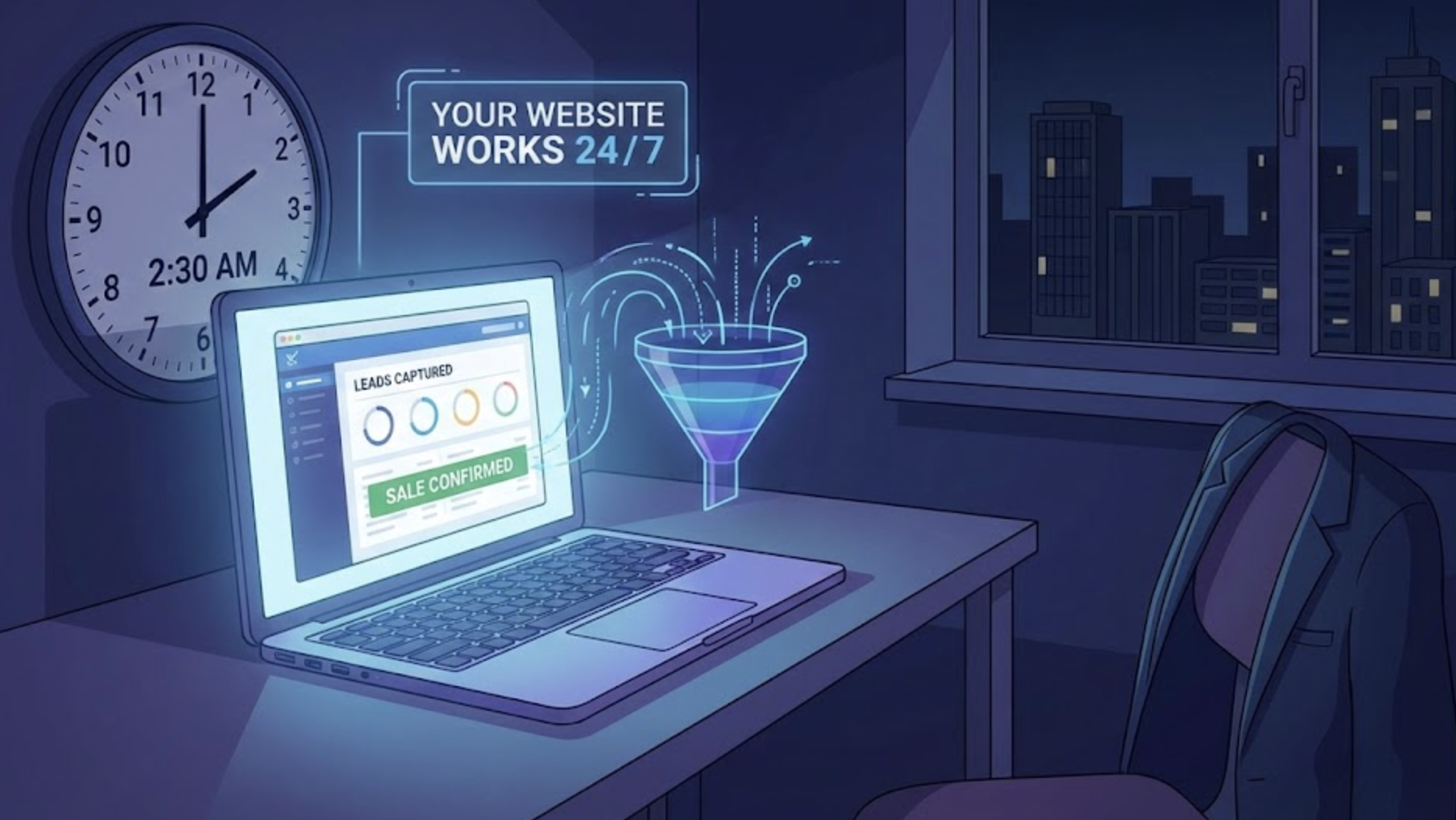
A business website never takes a day off. While you are busy serving clients, your website continues answering questions, capturing leads, and supporting customer support needs.
Through contact forms, booking tools, and well-placed calls to action, your website allows customers to reach out at their convenience. This is especially important outside regular business hours.
Clear information improves user experience and reduces friction. Visitors should be able to find services, pricing guidance, and contact information without effort. When this is done well, it improves conversion rates and saves time for both you and your customers.
Email marketing, digital marketing campaigns, and paid ads all rely on a strong landing page. Without one, marketing efforts lose effectiveness.
A website that works for you creates efficiency. It supports your customer service, filters serious inquiries, and helps your business grow without adding constant manual work.
Relying Only on Social Media Limits Your Growth
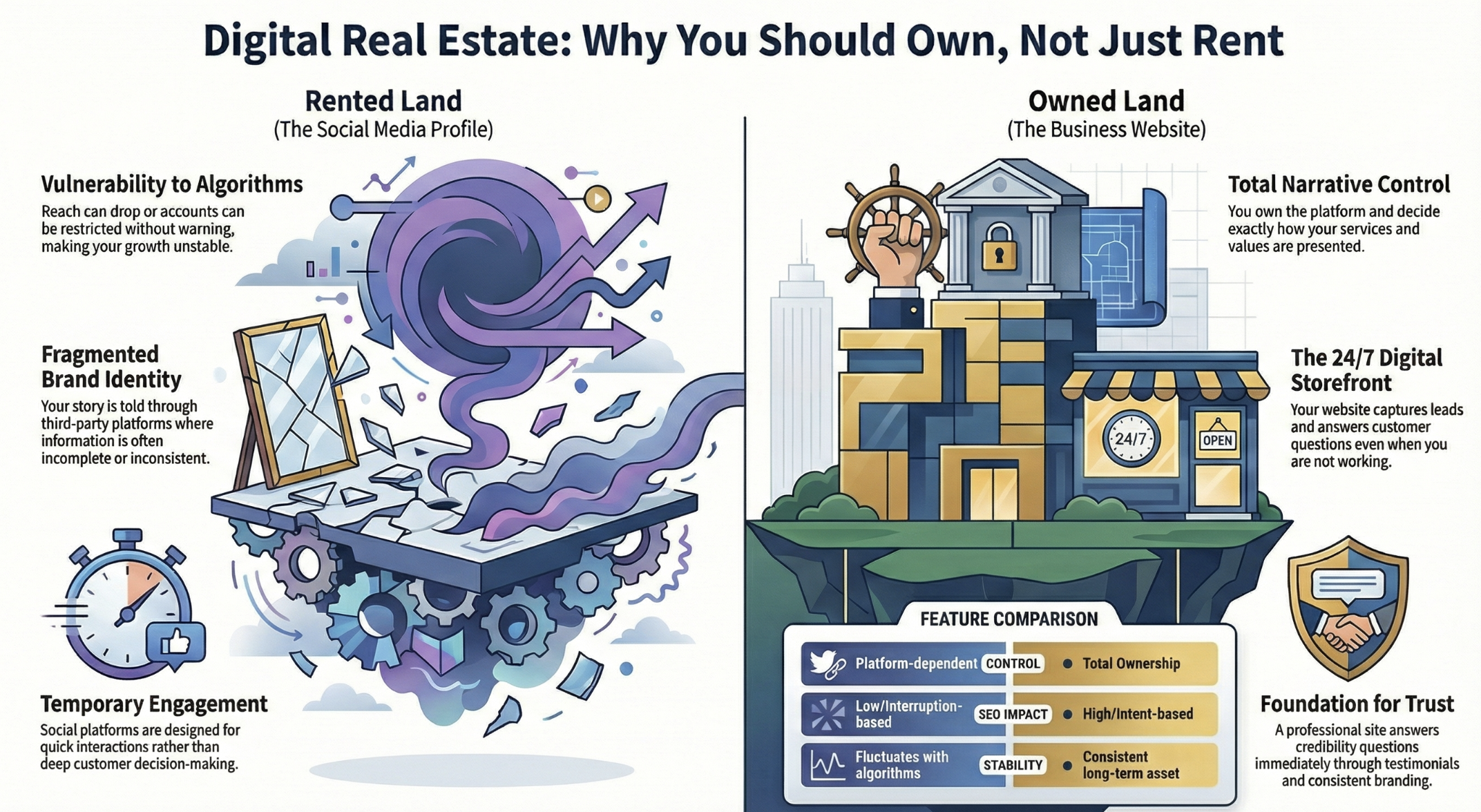
Social media can be useful, but it should not be your foundation. When your entire digital presence lives on platforms you do not control, your business becomes vulnerable.
Algorithms change. Reach drops. Accounts get restricted or removed. When that happens, businesses without a website are left scrambling.
A professional website gives you ownership. It becomes the central hub that supports social media, email marketing, and digital marketing campaigns. Instead of chasing attention, you guide people to a space you control.
Social platforms are designed for quick engagement, not deep decision-making. A website allows you to explain your value clearly, showcase customer testimonials, and build trust over time.
Growth requires stability. A website provides that stability while social media plays a supporting role rather than carrying the entire weight of your online presence.
A Website Lets You Control Your Brand Message
Your brand identity should not be shaped by third-party platforms. A website allows you to tell your story clearly and consistently, without distractions or limitations.
Through thoughtful website design, you can communicate your values, tone, and expertise in a way that feels authentic. This consistency helps customers understand who you are and what you stand for.
When information is scattered across listings and social profiles, it becomes harder to maintain accuracy. A website acts as the single source of truth for your business.
Clear messaging improves user experience and builds confidence. Visitors should never feel confused about what you offer or how to take the next step.
Control over your message strengthens trust and positions your business as intentional and professional.
A Website Supports Marketing and Advertising Efforts
Every successful digital marketing strategy needs a strong website behind it. Ads, email marketing, and social campaigns all depend on landing pages that convert interest into action.
Without a website, marketing efforts often lead nowhere. With one, each campaign has a clear destination that supports conversion and tracking.
Search Engine Optimization helps reduce long-term advertising costs by driving organic traffic. Over time, this improves return on investment and reduces reliance on paid channels.
A website also allows you to test messaging, refine user experience, and improve performance based on real data.
Marketing works best when everything connects. Your website is the piece that brings it all together.
A Website Builds Long-Term Business Value
A well-built business website is not an expense. It is an asset. Over time, it grows in authority, visibility, and usefulness.
As your business evolves, your website evolves with it. New services, new content, and improved customer support features can be added as needed.
Unlike temporary campaigns, a website continues delivering value year after year. It strengthens your digital presence and supports long-term growth.
For businesses thinking ahead, a website also adds credibility with partners, suppliers, and future buyers.
Long-term value comes from ownership, consistency, and visibility. A website delivers all three.
Downsides of Not Having a Website in 2026
You Instantly Lose Credibility and Trust
The moment a potential customer cannot find your website, doubt sets in. Even if your business was recommended by a friend, people still search online to confirm legitimacy. When there is no professional website to support that search, trust weakens.
A business website acts as proof that you are established and accessible. Clear contact information, consistent branding, and real customer testimonials reassure visitors that your business is real and reliable.
Without this foundation, customers rely on scattered information from social media or listings that may be outdated or incomplete. This lack of consistency damages your brand identity and makes your business feel less professional.
Credibility is not something you can explain away in a conversation. It is formed in seconds during that first online impression. In 2026, a missing website often signals risk, even when your service quality is high.
You Are Invisible to Customers Searching Online
When customers search for services you offer, search engines decide who gets seen. Without a website, your business has little to no chance of appearing in those results.
Search Engine Optimization requires content, structure, and relevance. All of that starts with a business website. Social media profiles alone cannot compete with optimized pages designed to attract organic traffic.
This invisibility means you miss out on customers who are actively looking for solutions. These are high-intent users who are ready to contact or buy. Without a website, those opportunities go to competitors who invested in their digital presence.
Visibility is not about popularity. It is about being available at the right moment. A professional website allows search engines to understand your business and connect you with people who already need what you offer.
You Have No Control Over Your Online Reputation
Your reputation exists online whether you manage it or not. Without a website, your business story is told by third-party platforms, reviews, and comments that you do not control.
A website gives you a place to present your values, address concerns, and highlight positive customer experiences. Customer testimonials, case studies, and clear messaging help balance public perception.
When customers cannot find your official site, they rely on fragmented sources that may not reflect your business accurately. This creates confusion and can lead to lost trust.
Control over your online reputation is part of good customer service. A website allows you to guide the conversation instead of reacting to it. In 2026, that control is essential for maintaining credibility and confidence.
You Can’t Run Effective Digital Marketing Campaigns
Digital marketing campaigns need somewhere to send traffic. Without a website, ads, email marketing, and promotions lose their impact.
A landing page built for conversion allows you to focus messaging, track performance, and improve return on investment. Without this, marketing efforts often lead to dead ends or generic profiles that do not convert.
Search engines and ad platforms also favor businesses with strong user experience. Fast loading pages, mobile-friendly layouts, and clear calls to action all support campaign success.
A website connects your marketing efforts into a single system. Without it, campaigns feel disconnected and results become difficult to measure or scale.
You Depend Too Much on Social Media Which You Don’t Own
Social media platforms are useful tools, but they are not assets you control. Algorithms change, reach declines, and accounts can be restricted without warning.
When your business depends entirely on social media, growth becomes unstable. A website gives you ownership of your digital presence and reduces reliance on unpredictable platforms.
Instead of renting attention, a website allows you to build lasting visibility. Social media should support your website, not replace it.
In 2026, businesses that survive changes in platforms are the ones that invested in assets they own. A professional website provides that stability.
You Miss Out on Direct Sales and E-Commerce Opportunities
A website opens the door to direct sales, bookings, and e-commerce opportunities that social platforms alone cannot support effectively.
Customers want simple, secure ways to buy or inquire. A business website allows you to guide users from interest to action without distractions.
Even service-based businesses benefit from online payments, booking forms, and lead capture tools. These features improve customer support and increase conversion rates.
Without a website, sales opportunities are often delayed or lost entirely. Convenience matters, and customers expect businesses to meet them where they are.
A website makes growth scalable. It turns interest into action and supports revenue beyond traditional methods.
Why Businesses Choose Javalogix for Website Design and Development
Building a website is not just about looking good online. It is about creating a digital presence that supports real business goals. At Javalogix, we work with businesses that want more than a template. They want a professional website that builds trust, attracts the right audience, and converts visitors into customers.
Our approach to website design starts with understanding your business, your customer base, and how people actually find and interact with your brand online. We focus on user experience, clear messaging, and performance across every mobile device. Every website we build is designed to support Search Engine Optimization, organic traffic growth, and long-term return on investment.
We also understand that a website should work alongside your digital marketing efforts. From landing pages that support campaigns to structures that improve email marketing and customer support, we build websites that fit into a complete growth strategy.
For small businesses especially, clarity matters. We create websites that are easy to manage, easy to scale, and built to support growth without unnecessary complexity. When you partner with Javalogix, you are not just getting website development. You are getting a team that treats your business website as a core asset, not an afterthought.
Your Website Is the Foundation of Business Growth in 2026
In 2026, having a website is no longer a question of preference. It is a business requirement. Customers expect to find you online, search engines expect a digital home to rank, and marketing efforts depend on a place that converts attention into action. Without a professional website, even great businesses lose opportunities before a conversation starts.
The good news is that the right website does more than check a box. It builds trust, strengthens your brand, supports digital marketing, and creates long-term value that grows with your business. When done properly, it becomes one of your most reliable assets.
If you are unsure whether your current website is helping or holding you back, Javalogix can help you find clarity. We design and build websites that support real business goals, not vanity metrics.
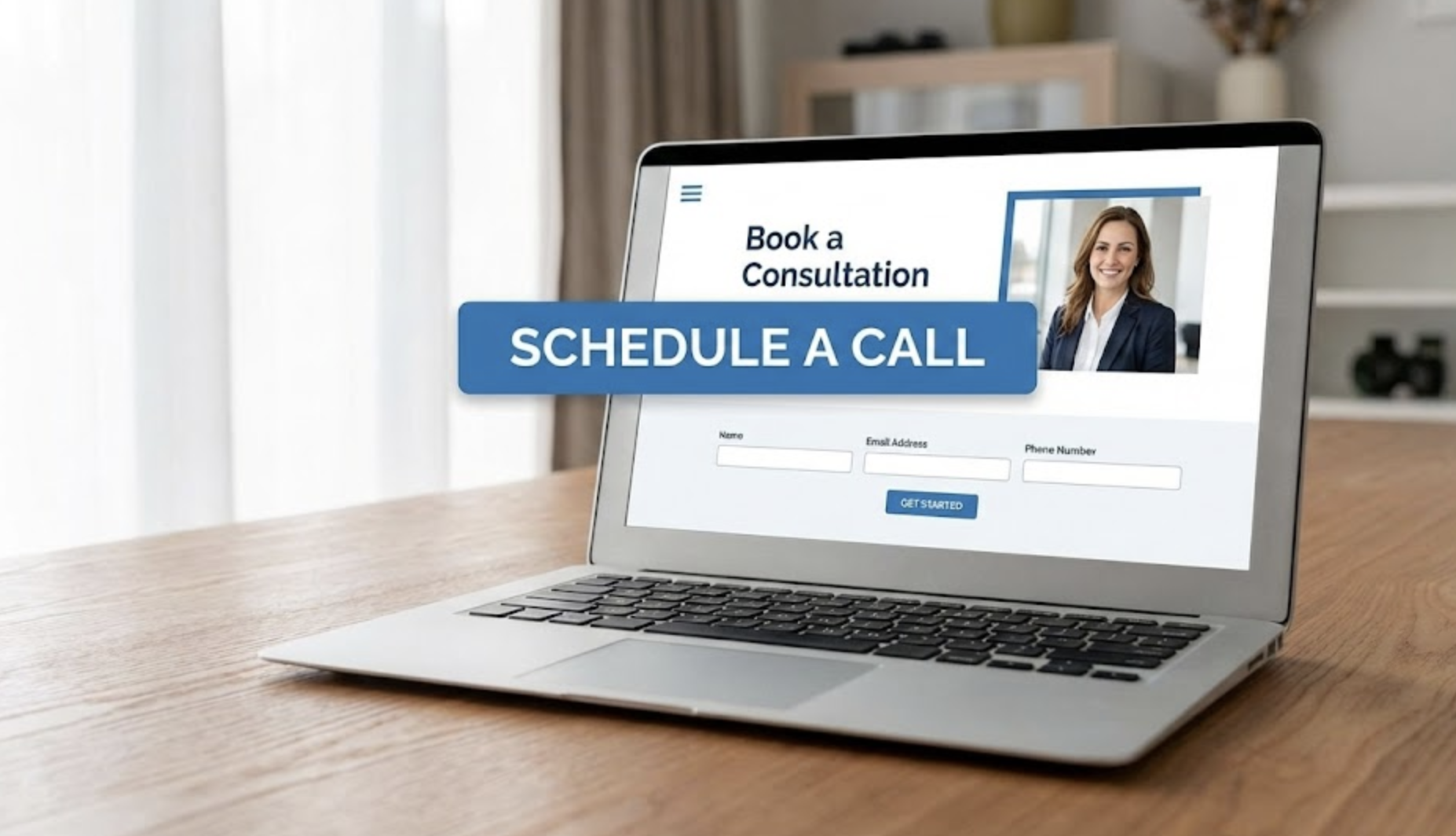
Book a consultation with Javalogix today and take the first step toward a website that actually works for your business.
Frequently Asked Questions
Do I really need a website if my business gets referrals?
Yes. Most referred customers still search online before contacting you. A website confirms credibility, answers basic questions, and prevents doubt that can stop a lead from reaching out.
Is social media enough for my business in 2026?
No. Social media supports visibility, but it does not replace a business website. You do not control reach, structure, or conversions on social platforms the way you do on your own site.
What makes a business website effective?
An effective website is easy to use, mobile-friendly, clear about services, optimized for search engines, and designed to guide visitors toward action through strong user experience.
When should a business update or rebuild its website?
If your site looks outdated, is slow, not mobile-friendly, or does not generate inquiries, it is time for an update. A website should support growth, not hold it back.
TL;DR
A professional website builds trust, improves visibility on search engines, supports marketing, and drives growth. In 2026, businesses without a website lose credibility, leads, and long-term opportunities.