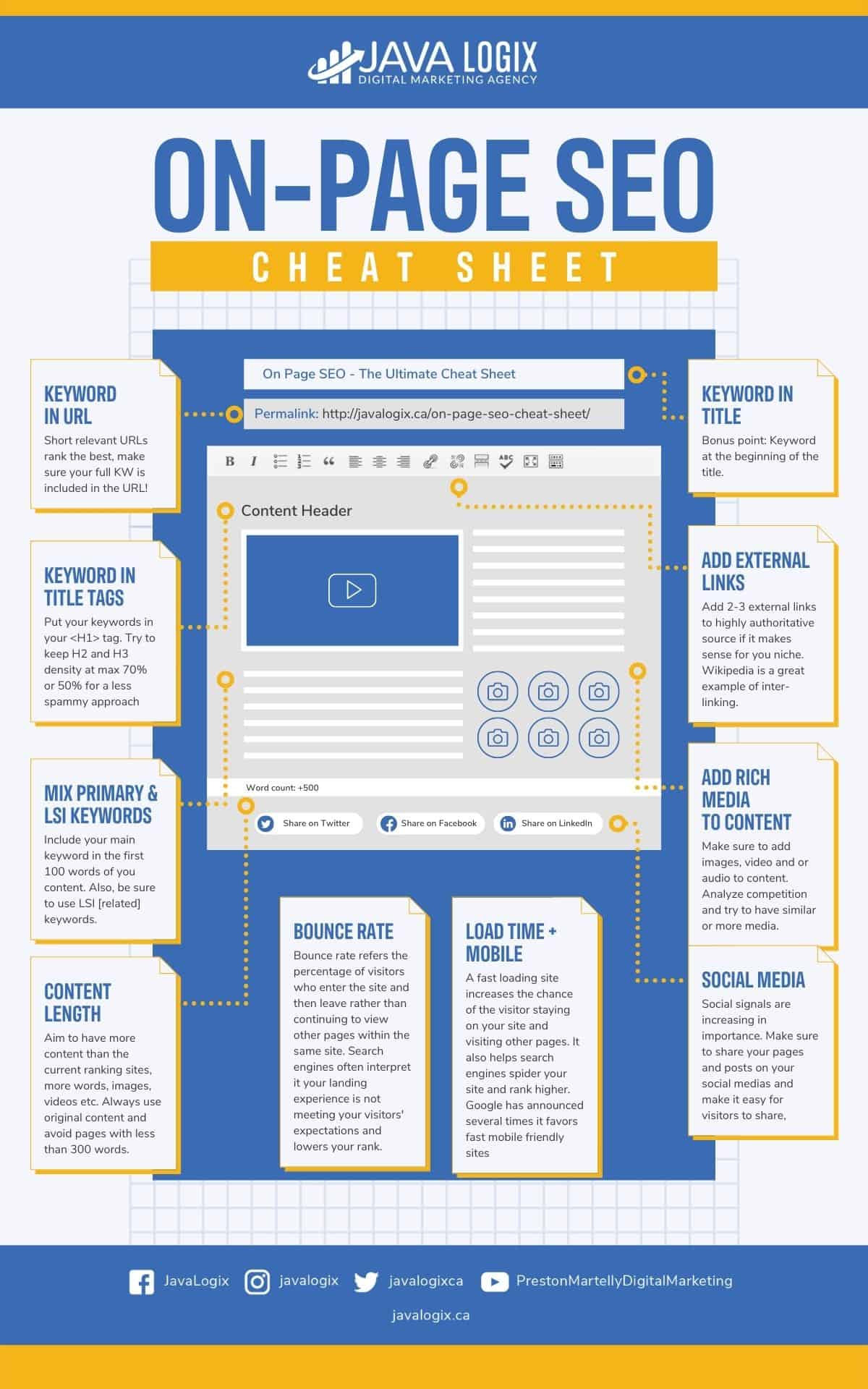
Is your content struggling to reach the first page of Google? If so, the problem might not be your topic or effort but on-page SEO. Unlike backlinks or third-party mentions, on-page SEO is fully in your control, and even small adjustments can make a big difference in how well your content ranks.
On-page SEO is one of the best ways to improve your content and increase your chances of ranking on the first page. By following a clear on-page SEO checklist or “cheat sheet”, including the On-Page SEO Cheat Sheet, beginners can systematically improve each page’s visibility. For example, effective on-page keyword optimization helps Google understand your content and increases your chances of ranking. As a Canadian digital marketing agency, JavaLogix emphasizes these fundamentals to boost both local and international search presence.
What Is On-Page SEO and Why Is It Important?
On-page SEO, also known as on-site SEO, is the practice of optimizing everything on your web pages that search engines and users interact with. This includes your title tags, meta descriptions, headings, content, images, and URL structure. When done correctly, on-page optimization makes your website easier for Google to understand, which improves your chances of ranking higher in search results.
Think of on-page SEO as sending clear signals to search engines about what your page is about. For example, the article you are reading right now is optimized with specific on page SEO keywords, structured headings, and readable formatting. The result is a page that appeals to both search engines and human visitors.

Why On-Page SEO Matters
- Improves rankings: Optimized metadata, keyword placement, and high-quality content increase the chances of appearing on the first page of search engine results (SERPs).
- Drives targeted traffic: By focusing on the right on-page keyword optimization, you attract visitors who are actively searching for what you offer, which means a higher chance of conversions.
- Enhances user experience: Best practices such as clean site architecture, optimized images, and removing duplicate content make your website faster and easier to navigate.
- Provides scalability: With a strong foundation, your pages can be updated with new information or optimized for evolving user intent without needing to start from scratch.
- Safe and sustainable: Unlike spammy tactics, following an on-page SEO checklist is a safe way to grow your visibility without risking penalties from Google.
In short, on-page SEO is essential for any business that wants to build a long-term online presence. It not only helps your website rank higher but also ensures your visitors have a positive experience, keeping them engaged and more likely to convert into customers.
Core On-Page SEO Elements
Title Tags and Meta Descriptions
These HTML elements are among the most important on-page signals. Title tags highlight the main topic of a page and appear as clickable headlines in search results. Make sure each page has a unique, keyword-rich title (around 50–60 characters) and a meta description (under 160 characters) that accurately summarizes the content. While meta descriptions don’t directly affect rankings, a compelling, relevant description can significantly improve your click-through rate from the search results.
Headings and Content Structure
Use headings (H1, H2, H3, etc.) to break up your content logically. A clear heading hierarchy makes pages more readable for users and easier for search engines to crawl. For example, one H1 title followed by descriptive H2/H3 subheads helps both people and Google understand each section. Structure your paragraphs in short, digestible blocks and use bullet or numbered lists where appropriate. This formatting encourages visitors to engage more deeply, since scannable content aligns with reader habits. Avoid skipping heading levels (e.g. jumping from H2 to H4) because this can confuse search crawlers and harm SEO.
High-Quality, Keyword-Rich Content

Create content that addresses user intent and provides value. Good content not only satisfies search queries but also demonstrates your authority on the topic. Integrate your target keywords naturally; use variations and long-tail phrases like “best Italian restaurants in Ottawa” to capture specific searches. Tools like Google Keyword Planner or SE Ranking can help find these long-tail terms.
Aim for at least 300–500 words per page to give search engines enough material to index. Always write for humans first: overstuffing keywords makes content hard to read and can trigger search penalties. Instead, maintain a healthy keyword density (~1–2%) and use synonyms so your writing flows naturally.
Images and Media
Images, videos and infographics enrich your pages and can boost engagement. However, optimize them carefully: use descriptive file names and add alt text that includes relevant keywords when possible. Alt text helps search engines understand image content and improves accessibility.
Keep image file sizes small to avoid slow load times. Remember, slow-loading pages frustrate users and can hurt rankings. Embedding media wisely also means ensuring it is responsive (scales to mobile screens) and relevant to the content on the page.
URL Structure
A clear URL structure is an important part of on-page SEO. Keep URLs short, descriptive, and easy to read. For example, use www.example.com/best-coffee-shops-toronto instead of www.example.com/category/12345 . Adding relevant keywords can improve search visibility, but avoid stuffing or use special characters and random numbers.
Stick to lowercase letters for consistency and build a logical hierarchy so users and search engines can navigate your site more easily. If you change a URL, set up a 301 redirect to keep the SEO value intact. Regularly check that all URLs are working, readable, and aligned with your site’s content.
Keyword Optimization and Analysis
Identifying and analyzing keywords is foundational. Start with on-page keyword analysis: research which terms and phrases your audience uses, and assign 3–5 primary keywords to each page. Use tools like Google Search Console to track your rankings for these keywords over time. Regular monitoring lets you see what’s working and what needs improvement. Keep an eye on competitors’ rankings too: this can uncover keyword opportunities you might have missed.
Once you have your keywords, place them strategically. Your primary keyword should appear in the title tag, H1 heading, URL, meta description, and the first paragraph of the content. Sprinkle secondary and related keywords throughout the page where they fit naturally. Remember, use of long-tail keywords can attract very targeted traffic. For example, a Toronto bakery might target “best gluten-free cupcakes in Toronto” to reach hungry customers searching for that specialty.
Maintain the right keyword density. A healthy range is about 1–2% (meaning 1–2 instances of the keyword per 100 words). You can check this with online tools or even manually. Avoid over-optimization: stuffing keywords can make content unreadable and trigger penalties. Instead, focus on reader experience, and revise if a sentence feels forced.
Internal Linking
Internal links guide visitors through your site and help search engines understand your content. Use clear, descriptive anchor text so readers know what to expect when they click. For example, link the phrase SEO best practices to a related article rather than using vague text like click here.
Vary your anchor text to avoid over-optimization and always point to relevant pages that add value. Make sure all internal links work properly, since broken links can hurt both user experience and SEO.
A thoughtful internal linking strategy directs visitors to important pages and encourages them to explore more of your content. Review your links regularly to keep them functional, relevant, and aligned with your SEO goals.
Schema Markup
Schema markup is structured data that helps search engines understand your content more clearly. Adding schema can also improve how your pages appear in search results, sometimes showing rich snippets like star ratings, FAQs, or event details.
Different schema types serve different purposes. For example, Local Business schema can boost visibility for brick-and-mortar shops, while Product schema highlights price and availability for e-commerce. FAQ schema is also popular for capturing quick-answer boxes in Google results.
You can generate schema using tools like Google’s Structured Data Markup Helper, then test it with the Rich Results Test to make sure it works correctly. Always match your schema to the actual content on the page to avoid errors or penalties.
Updating and monitoring schema through Google Search Console ensures it continues to support your SEO as your site evolves.
On-Page SEO Checklist

Use a checklist to ensure no optimization step is missed. A typical on-page SEO cheat sheet might include tasks like:
- Keyword Placement: Include your main keyword in the title tag, H1, meta description, URL and opening paragraph.
- Meta Optimization: Write unique title and meta descriptions for every page. Keep titles under ~60 characters and descriptions under ~160 characters, both clearly reflecting the page’s content.
- Heading Tags: Use one H1 per page (the page title) and additional H2/H3 tags for subheadings. Well-structured headings improve readability and SEO.
- Content Quality: Ensure content is original, relevant, and answers user questions. Longer content tends to perform better, so aim for at least 300 words per page. Use synonyms and related terms to avoid keyword stuffing while keeping your main topic clear.
- Images: Add descriptive alt text to all images (including keywords naturally), use compressed image files, and have them relevant to the page content.
- Internal Links: Link to related pages on your site using clear, descriptive anchor text. This helps visitors find more content and spreads SEO value throughout your site.
- URL Clarity: Keep URLs short, readable, and keyword-focused (avoid long query strings or random numbers).
- Mobile & Speed: Ensure the page loads fast and is mobile-friendly. Since most searches now come from mobile devices, Google favors responsive designs and quick load times.
- Schema Markup: When applicable, add structured data (schema) to help search engines understand your content (e.g. for articles, products, FAQs).
- Readability: Format text with short paragraphs and bullet lists. This makes content easy to skim and improves user engagement.
- Duplicate Content Check: Avoid publishing two pages with the same focus/keywords. Consolidate or canonicalize to prevent cannibalization.
- Regular Updates: Periodically review and update content, keywords, and media to keep the page current and aligned with search intent.
Partner with JavaLogix for SEO Success
As you optimize, remember that SEO is an ongoing process. JavaLogix, a leading digital marketing agency in Canada, specializes in crafting data-driven SEO strategies tailored to each business. They emphasize comprehensive keyword research, on-page optimization, and analytics to achieve measurable growth. By combining creative storytelling with technical expertise, JavaLogix ensures campaigns resonate with your target audience and deliver real results.
For example, JavaLogix experts can conduct in-depth on-page keyword analysis to identify the best terms for your site. They also optimize each HTML element; from title tags to meta descriptions, for both search engines and users. With their support, even small businesses can compete in competitive markets by following proven on-page SEO checklists and best practices.
Ready to improve your rankings? Book a discovery call with JavaLogix. We’ll turn this on-page SEO checklist into a prioritized action plan for your site.
Frequently Asked Questions
What is on-page SEO and why is it important for my website?
On-page SEO refers to the techniques you use directly on your website to improve its visibility in search engines. It’s important because it helps search engines understand your content better, which can lead to higher rankings and more traffic.
How can I choose the right keywords for my web pages?
To choose the right keywords, think about what your audience is searching for. Use keyword research tools to find popular terms related to your content, and make sure to include those keywords naturally in your text.
What role do title tags and meta descriptions play in on-page SEO?
Title tags and meta descriptions help summarize your page’s content for both search engines and users. A good title tag makes your page more clickable in search results, while an appealing meta description can encourage users to visit your site.
How do I optimize images for better SEO?
To optimize images, use descriptive file names and alt text, which helps search engines understand the image content. Also, make sure to compress images to reduce loading times, as faster pages rank better.
What should I include in my blog posts to improve on-page SEO?
To improve on-page SEO in your blog posts, include relevant keywords, use headings for structure, add internal and external links, and incorporate multimedia like images or videos. This keeps readers engaged and helps search engines find your content.
TL;DR On-page SEO boosts your website’s search engine visibility through key practices. Track keyword rankings to monitor performance, understand keyword density for effective placement, and utilize long-tail keywords for targeted traffic. Optimize title and meta tags, structure your content with proper headings, and create clean URLs. Produce high-quality content, optimize images, and use internal and external linking to enhance credibility. Implement schema markup for better visibility, monitor site speed and mobile-friendliness, and regularly update content for relevance. Following these steps helps improve your rankings and attracts the right audience.
Use this guide to help you optimize your webpage content for search engines.